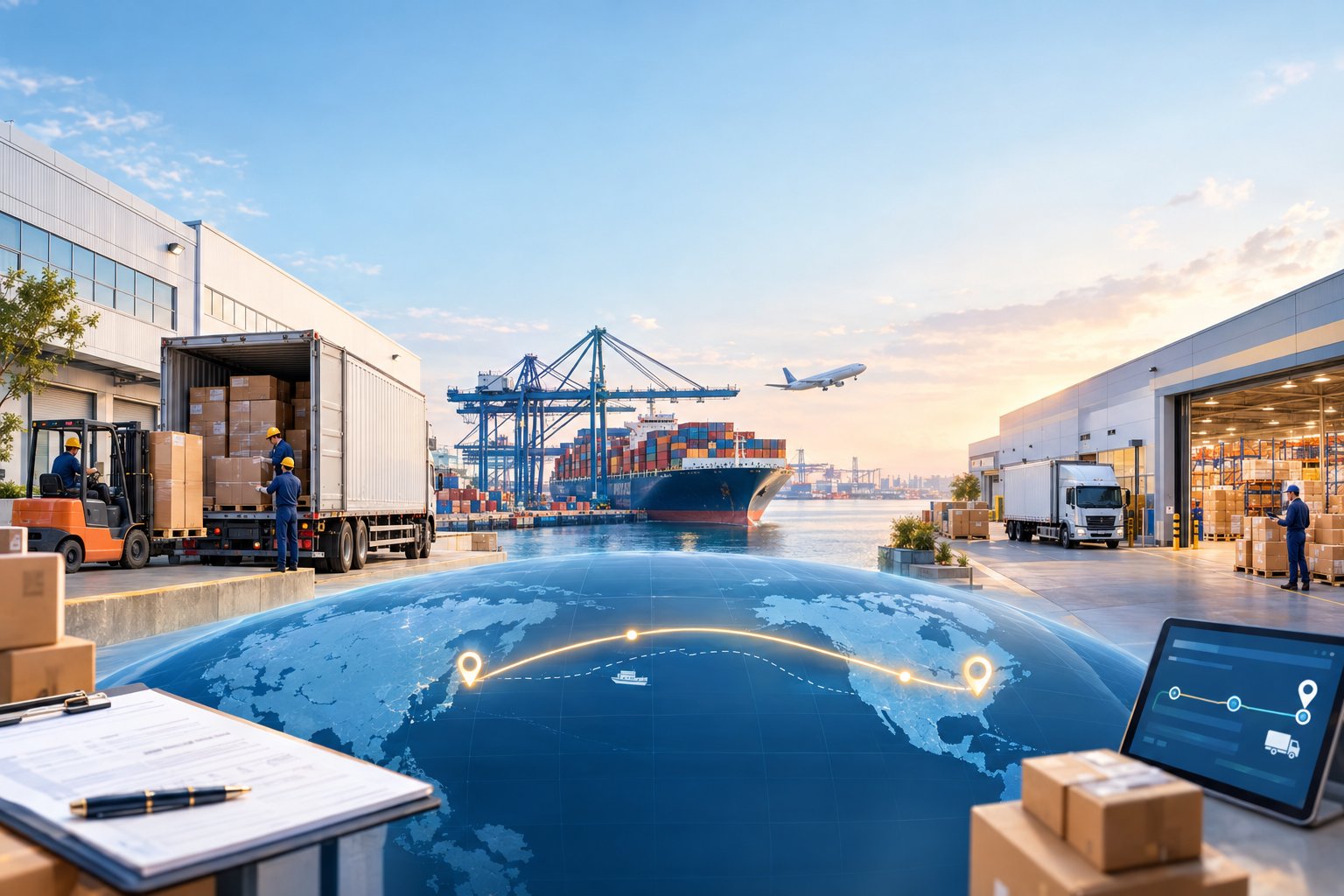
Door-to-Door Shipping China to USA Case Study: Real-World Insights and Lessons

Door-to-Door Shipping China to USA Case Study – let’s dive right in. Importing products from China to the USA sounds simple, but it’s actually a maze of steps. From factory pickup to final delivery at your warehouse, a lot can go wrong.
Door-to-door shipping from China to USA solves most headaches by letting a single freight forwarder manage every stage. They handle cargo collection, customs clearance, delivery, and all the paperwork.
This approach saves you time and cuts down the risk of expensive mistakes. Who wants to deal with customs paperwork alone?
Understanding door-to-door freight forwarding from China to USA helps you make smarter choices about shipping, costs, and logistics partners. Many businesses get stuck deciding between sea freight, air freight, or express—plus, there’s customs, duties, and tracking to think about.
This Door-to-Door Shipping China to USA Case Study breaks down what actually happens, compares shipping methods, and explains cost factors. You’ll see how to pick reliable partners and keep your shipments on track.
Contents hide
2 End-to-End Shipping: How the Process Works
2.1 Supplier Pickup and Cargo Preparation
2.2 Export Customs, Freight Selection, and Consolidation
2.3 Import Customs Clearance and Final Delivery
3 Shipping Methods Compared: Sea, Air, and Express Options
3.1 Sea Freight: FCL, LCL, and Cost Factors
3.2 Air Freight and Express Shipping: When Speed Matters
3.3 Choosing the Right Shipping Mode
4 DDP, DAP, FOB, and Other Incoterms: Duties, Fees, and Responsibilities
4.1 Door-to-Door Shipping China to USA Case Study: Understanding Delivered Duty Paid and Other Terms
4.2 Benefits and Drawbacks for Importers
5 Customs Procedures and Required Shipping Documents
5.1 Commercial Invoice, Packing List, and Essential Paperwork
5.2 HS Codes, Declarations, and Customs Bond
5.3 Import Customs Review and Release in the USA
6 Cost Breakdown and Strategies to Reduce Shipping Expenses
6.1 Freight Rates, Surcharges, and Handling Charges
6.2 Import Duties, Taxes, and Hidden Fees
6.3 Optimizing Packing, Weight, and Logistics for Savings
7 Real-Time Tracking, Insurance, and Risk Management
7.1 Shipment Tracking and Updates
7.2 Door-to-Door Shipping China to USA Case Study: Cargo Insurance and Claims Support
7.3 Minimizing Delays and Common Pitfalls in Door-to-Door Shipping China to USA
8 Door-to-Door Shipping China to USA Case Study: Amazon FBA Delivery
8.1 Amazon FBA Logistics and Compliance
8.2 Managing Documentation and Customs Challenges
8.3 Lessons from This Door-to-Door Shipping China to USA Case Study
9 Choosing a Freight Forwarder for Door-to-Door Shipping China to USA
9.1 Evaluating Experience and Service Scope
9.2 Key Questions to Ask Before Choosing
10 Frequently Asked Questions: Door-to-Door Shipping China to USA Case Study
https://www.youtube.com/watch?v=lVmbnWpc-Uw
RELATED China to USA Ocean Freight Case Study – 1×20FT Container from Shenzhen
Key Takeaways
Door-to-door shipping covers everything from pickup in China to delivery in the USA, with one freight forwarder managing all steps.
Choosing the right shipping method and knowing your Incoterms can make a big difference in your costs and responsibilities.
Experienced logistics partners offer better tracking, customs help, and fewer shipping headaches.
RELATED China to USA Shipping: Complete Guide for Success
End-to-End Shipping: How the Process Works
Door-to-door shipping from China happens in three main stages. First, cargo goes from your supplier’s location to the port. Next, it crosses borders. Finally, it arrives at your warehouse. Your freight forwarder coordinates each part so you stay in control.
Supplier Pickup and Cargo Preparation
Your logistics provider arranges pickup right at your supplier’s factory or warehouse in China. You don’t need to book trucks or mess with local transport.
During cargo prep, your goods get inspected, counted, and packed to meet international shipping standards. Your freight forwarder checks that packaging fits your shipping method.
Key preparation steps include:
Product checks and quality control
Labeling with shipping marks
Palletizing or containerizing
Documenting contents and values
Hazardous materials classification (if needed)
Your freight forwarder creates the first shipping documents at this stage. They handle commercial invoices, packing lists, and certificates of origin.
Export Customs, Freight Selection, and Consolidation
Export customs clearance starts at the Chinese port before your goods leave the country. Your freight forwarder submits all documents to Chinese customs and pays export fees.
You’ll need to choose—air freight, sea freight, or rail? Sea freight takes 15-35 days but costs less. Air freight is faster, 3-7 days, but it’s pricier.
Freight management options:
| Method | Transit Time | Best For |
|---|---|---|
| FCL (Full Container Load) | 15-30 days | Large shipments over 15 cubic meters |
| LCL (Less than Container Load) | 20-35 days | Smaller volumes shared with other cargo |
| Air Freight | 3-7 days | Urgent or high-value items |
| Express Courier | 2-5 days | Small parcels under 100 kg |
Your freight forwarder issues a bill of lading for ocean shipments or an air waybill for air cargo. These are your proof of shipment and contract.
Import Customs Clearance and Final Delivery
Once your cargo arrives at a U.S. port, import customs clearance begins right away. Your freight forwarder or customs broker submits your entry documents to U.S. Customs and Border Protection.
You’ll need to pay duties, taxes, and processing fees before they release your shipment. Your broker figures out these costs using your HS codes and declared values.
After customs release, inland trucking brings your cargo to your final stop. Your freight partner handles this last-mile delivery to your warehouse or business.
Final delivery includes:
Appointment scheduling at your site
Tracking updates until arrival
Proof of delivery confirmation
Damage inspection when you receive your goods
Your Door-to-Door Shipping China to USA Case Study process ends when you sign for the goods at your door. Most forwarders offer online tracking so you can keep an eye on every phase.
RELATED Essential Guide to Shipping from China to USA: Optimize Your Logistics
Shipping Methods Compared: Sea, Air, and Express Options
The price gap between different shipping methods from China to the USA can be huge—sometimes up to 2400%. For example, a 300kg shipment might be $236 by sea, $1,650 by air, or $2,550 by express, using 2026 rates from Shenzhen.
Sea Freight: FCL, LCL, and Cost Factors
FCL shipping (Full Container Load) gives you a whole container. A 20-foot container from China to the US West Coast costs $2,000-$2,350 in early 2026, holding about 28 cubic meters and up to 5,600kg. That’s around $0.36 per kilogram, making it the cheapest per unit.
LCL shipping (Less than Container Load) lets you share space with others. You pay $50-$118 per cubic meter, with at least 1 CBM. LCL takes 25-35 days since your goods get consolidated and deconsolidated at each end.
FCL transit time is usually 14-16 days port-to-port, or 20-25 days door-to-door. East Coast destinations add 5-10 days compared to the West Coast.
Sea freight DDP (Delivered Duty Paid) covers duties and taxes before arrival, so you won’t face surprise charges. This is especially handy for Amazon FBA shipping since your inventory arrives ready to go.
Air Freight and Express Shipping: When Speed Matters
Air freight from China delivers in 5-10 days at $4.50-$7.00 per kilogram for shipments over 100kg. Lighter shipments under 100kg pay $7-$9/kg because they don’t get bulk rates. The minimum is 21kg.
Express shipping from China via DHL, FedEx, or UPS gets your goods there in 2-5 days at $8.50/kg and up. This is a tracked, door-to-door service with customs clearance included.
Both methods charge by chargeable weight—that’s whichever is greater: the actual weight or volumetric weight. The formula is L(cm) × W(cm) × H(cm) ÷ 5000. So, a 2kg product in a 40×40×40cm box counts as 12.8kg, and you pay for 12.8kg.
Air freight DDP handles duties upfront, just like sea freight DDP. For urgent shipments like Amazon FBA restocks or new product launches, air freight offers a good balance of speed and cost for orders over 100kg.
Choosing the Right Shipping Mode
Pick express shipping for small, urgent orders under 100kg where speed is worth the extra cost. Choose air freight for FBA restocks between 100-500kg when you need inventory fast but want to avoid express prices.
Go with sea freight for big shipments over 500kg or 5 cubic meters if you can plan 4-6 weeks ahead. The savings are huge—up to 90% compared to air. Some sellers mix it up: send 200-300 units by air to start selling, then follow up with a sea container for the bulk stock.
Shipping times change with the season. August to October, rates jump 30-50% for air and can double for sea as everyone gears up for holidays. March to May is usually cheapest, with better container availability—perfect for big orders.
RELATED Freight Shipping from China to USA: Methods, Costs & Key Steps
DDP, DAP, FOB, and Other Incoterms: Duties, Fees, and Responsibilities
When shipping from China to the USA, your incoterm decides who pays for freight, customs, and insurance. Your total landed cost and control over shipping depend on whether you use DDP, DAP, FOB, or something else.
Door-to-Door Shipping China to USA Case Study: Understanding Delivered Duty Paid and Other Terms
Incoterms are 11 standardized trade terms set by the International Chamber of Commerce. These terms spell out who’s responsible for what in global shipping, and for Door-to-Door Shipping China to USA Case Study, a few pop up all the time.
Delivered Duty Paid (DDP) gives sellers almost all the responsibility. With DDP shipping from China, your supplier handles export clearance, ocean or air freight, import customs duties, and final delivery to your door.
It’s the only incoterm where the seller acts as the importer of record in the destination country. Basically, you get to skip most of the headaches.
Delivered at Place (DAP) means the seller gets the goods to your location, but you pay for import duties, taxes, and customs. The seller covers the freight, while you handle customs clearance.
Free on Board (FOB) passes the baton as soon as goods are loaded onto the ship in China. You pay for ocean freight, insurance, and everything else at the destination. This one only works for ocean shipping.
Ex Works (EXW) puts you in charge from the supplier’s warehouse. You arrange and pay for pickup, export clearance, and all freight costs.
Benefits and Drawbacks for Importers
With DDP door-to-door shipping, life gets simpler and costs are predictable. Your supplier handles customs and duties, so you know your total landed cost upfront.
You lose control over which carrier or shipping method gets used. Some suppliers might add a markup to freight charges.
FOB and EXW give you more control over costs and carrier choice. You can pick your own freight forwarder and maybe even snag a better rate.
The catch? You have to manage export procedures in China, which isn’t always easy if you’re new to the game.
Different countries require different procedures, like customs bonds in the USA. DAP splits things up, which is handy if you want your supplier to handle transport but you’d rather take care of customs yourself.
This works well if you already have a customs broker or need specific import paperwork. Think about your experience level and resources before picking a term.
New importers often stick with DDP or DAP, even if they cost more. Experienced buyers usually lean toward FOB or FCA for more control.
RELATED China to USA Ocean Freight Case Study: End-to-End Logistics Execution for Industrial Machinery
Customs Procedures and Required Shipping Documents
Moving goods from China to the USA means paperwork—lots of it. Your customs broker handles most filings, but you still need to provide accurate documents and understand bond requirements to avoid customs delays.
Commercial Invoice, Packing List, and Essential Paperwork
The commercial invoice is the big one for customs clearance. It needs buyer and seller info, product descriptions, unit prices, total value, and payment terms.
US Customs uses this to figure out duties and taxes. Your packing list breaks down every box or pallet in the shipment, including dimensions, weight, carton numbers, and contents.
Customs officers use it to match up cargo with the invoice. You’ll also need a Bill of Lading for ocean freight or an Air Waybill for air shipments. These prove ownership and track your cargo.
Some shipments need a certificate of origin to get lower tariffs under certain trade deals. Shipping electronics or food? You might need extra certificates.
HS Codes, Declarations, and Customs Bond
Every product must have an HS code classification, a 10-digit number that tells customs what your product is and what duty rate applies.
Wrong codes lead to delays and sometimes fines. You also have to file an ISF (Importer Security Filing) at least 24 hours before your ocean container loads in China.
This filing covers 10 data points about your shipment. Miss the deadline or enter something wrong, and you could face fines starting at $5,000.
Most commercial imports need a customs bond. It guarantees you’ll pay duties and follow the rules. Single-transaction bonds cover one shipment. Continuous bonds cost about $400-$500 per year and cover unlimited shipments up to $50,000 in duties per entry.
Your customs broker manages import customs clearance and files CBP Form 7501, the official entry summary.
Import Customs Review and Release in the USA
When your shipment hits a US port or airport, Customs and Border Protection (CBP) reviews your paperwork. They check the commercial invoice, packing list, HS codes, and bond status.
Most shipments clear in 1-3 business days if everything’s in order. CBP might select your cargo for inspection, which adds 2-5 days.
They inspect randomly or if something seems off, like unclear product descriptions or it’s your first time importing. Your customs broker tracks the status and lets you know when cargo is released.
They pay duties on your behalf and send you the final invoice. After customs clears your shipment, your freight forwarder arranges final delivery to your warehouse or business address.
RELATED Shipping From China To The USA: Essential Guide For Import Logistics And Costs
Cost Breakdown and Strategies to Reduce Shipping Expenses
Shipping costs from China to USA stack up fast. There are more layers than just the base freight rate. Knowing each piece and using smart strategies can cut your shipping costs by 15-30% in a Door-to-Door Shipping China to USA Case Study.
Freight Rates, Surcharges, and Handling Charges
Your base freight cost is just one part of the total shipping costs from China to USA. Ocean freight for a 20-foot container from Shanghai to Los Angeles usually runs $1,000 to $2,300.
A 40-foot container costs $1,800 to $3,800. But that’s just the beginning.
Expect these extra surcharges:
Fuel surcharges (Bunker Adjustment Factor) that change with oil prices
Terminal handling charges at both ends
Port congestion fees, especially in peak season
General Rate Increase (GRI) from shipping lines
Documentation and security fees
US port destination charges add another $500 to $1,200 per container. These cover unloading, customs, and port storage.
Air shipping rates from China? They’re $4.50 to $9.00 per kilogram, depending on the route and season. Express couriers charge more, but their prices usually include most handling fees.
Import Duties, Taxes, and Hidden Fees
Import duties and taxes depend on your product’s Harmonized Tariff Schedule code. Most goods get hit with duties between 0% and 37.5% of the declared value.
You’ll also see these fees:
Merchandise Processing Fee (0.3464% of shipment value, min $27.75, max $538.40)
Harbor Maintenance Fee (0.125% of cargo value)
Customs broker fees ($50 to $200 per entry)
ISF filing fees ($25 to $100)
Hidden costs sneak in, like exam fees, demurrage for late container pickup, and storage fees. Ask for an all-inclusive quote that lists every charge to avoid surprises.
Some suppliers offer DDP (Delivered Duty Paid) terms. They handle all duties and taxes upfront, so your landed costs don’t change.
Optimizing Packing, Weight, and Logistics for Savings
Good packaging can save you a lot. If you maximize container space, you don’t pay for empty air.
A 20-foot container holds 28 cubic meters. A 40-foot high cube fits 68 cubic meters. Get the most out of your space.
Try these tactics:
Consolidate shipments so you fill containers instead of paying more for LCL rates
Reduce packaging weight but keep your products safe
Calculate dimensional weight for air shipments (length × width × height ÷ 166 in inches)
Pick slower transit outside peak season when rates drop 20-40%
Work with your supplier to tweak carton sizes and stacking. Even small changes in box size can help you fit more per pallet.
Smart ways to reduce shipping costs include booking directly with freight forwarders instead of relying only on your supplier’s contacts. Compare quotes from several providers and negotiate discounts for regular shipments.
RELATED Ship from China to USA: Complete Guide to Methods, Costs & Customs
Real-Time Tracking, Insurance, and Risk Management
Modern door-to-door shipping means you need visibility and protection. Tracking systems keep you updated, while insurance covers losses and good planning helps you steer clear of common delays.
Shipment Tracking and Updates
Your door-to-door shipping service should provide real-time tracking from pickup in China to your door in the USA.
You get a tracking number when your cargo ships. Most freight forwarders offer online portals so you can see where your shipment is at any stage.
These systems update automatically at each milestone—leaving China, arriving at the US port, clearing customs, and final delivery. You get to see what’s happening in real time.
Typical tracking updates:
Container loaded and left the Chinese port
Vessel’s current location during ocean transit
Arrival and unloading at the US port
Customs clearance progress
Final mile delivery confirmation
Tracking reduces stress and helps you plan inventory. You can update customers about delivery times and arrange warehouse schedules based on real arrival info. In a Door-to-Door Shipping China to USA Case Study, these updates are a lifesaver for planning and peace of mind.
Door-to-Door Shipping China to USA Case Study: Cargo Insurance and Claims Support
Door-to-Door Shipping China to USA Case Study highlights how shipping insurance protects your goods against damage, loss, or theft during transit. Standard carrier liability usually covers only minimal amounts per kilogram, which rarely matches your cargo’s true value.
Comprehensive cargo insurance usually costs between 0.3% and 1% of your shipment’s declared value. This coverage spans ocean freight, inland transport, and last-mile delivery in the U.S.
Your insurance policy should cover:
Physical loss or damage during transport
Theft or pilferage
Natural disasters and accidents
Customs rejection and returns
You’ll need detailed documentation to file claims. Keep your commercial invoice, packing list, bill of lading, and photos as proof of damage.
Most insurers want claims filed within 30 to 90 days of delivery. Don’t wait too long—missing that window can make things tricky.
Minimizing Delays and Common Pitfalls in Door-to-Door Shipping China to USA
Incomplete or incorrect documentation causes most customs delays. Your shipment needs a commercial invoice, packing list, and accurate Harmonized System codes for every product.
Common mistakes that create delays:
Missing or wrong importer of record info
Undervalued goods, which trigger customs inspections
Unclear product descriptions
Missing certificates for regulated items
Incorrect duty and tax calculations
Peak shipping seasons from August to October bring heavy port congestion. Plan extra transit time during these months.
West Coast ports usually clear faster than East Coast ones. It’s not a guarantee, but it helps.
Pick a freight forwarder who handles customs clearance proactively. They should check your documents before shipping and stay in touch with customs brokers.
This level of preparation can prevent costly delays and storage fees at the port. It’s worth the extra effort.
RELATED Shipping from China to United States: Complete 2026 Guide
Door-to-Door Shipping China to USA Case Study: Amazon FBA Delivery
A mid-sized electronics seller needed to ship 800 Bluetooth speakers from Shenzhen to three Amazon fulfillment centers across the U.S. The shipment required strict Amazon packaging compliance and tight delivery windows to avoid stockouts during peak season.
Amazon FBA Logistics and Compliance
The seller picked Amazon FBA shipping from China using a freight forwarder with DDP service. The forwarder handled pickup, warehouse consolidation, and FBA-compliant labeling at their Shenzhen facility.
Each carton needed box labels matching the FBA shipment plan in Seller Central. The forwarder checked that all boxes stayed under 50 pounds and put the right Amazon reference IDs on each unit.
The team chose sea freight LCL for most inventory and air freight DDP for 150 priority units. This split approach kept costs down but ensured stock stayed available.
Key compliance steps included:
Checking carton dimensions met Amazon’s 25-inch standard
Printing and applying FNSKU labels to each unit
Creating pallet labels for LTL delivery
Scheduling delivery appointments in Carrier Central
The forwarder also checked packaging quality to avoid damage during ocean transit. They added corner protectors and stretch wrap to pallets before loading.
Managing Documentation and Customs Challenges
The commercial invoice listed accurate HS codes and declared values matching supplier invoices. The freight forwarder prepared the packing list with detailed carton counts, weights, and sizes for customs review.
U.S. customs flagged the shipment for a random inspection at the port. The forwarder’s customs broker quickly responded with extra product certifications and safety documents.
Since the seller used DDP terms, the freight forwarder paid all duties and taxes upfront. This step avoided delays that would’ve happened if the seller had to handle import clearance.
The air freight portion cleared customs in 48 hours. The sea freight took three extra days due to the inspection but still arrived on schedule.
Lessons from This Door-to-Door Shipping China to USA Case Study
The seller realized booking door-to-door shipping from China to the USA two weeks earlier would’ve dodged peak season surcharges. Air freight costs jumped 18% during the rush.
Splitting shipments between air and sea worked out well. The 150 units sent by air kept sales going while the main inventory arrived at a lower cost.
Improvements for next time:
Confirm carton dimensions before production starts
Add a 5-day buffer to delivery schedules for possible customs delays
Stick with the same freight forwarder for consistent labeling and appointments
Final delivery to all three Amazon warehouses finished without issues. The seller avoided rejection fees and kept their inventory performance index score steady through the restock cycle.
RELATED China to USA Ocean Freight Case Study – 1×20FT Container from Shenzhen
Choosing a Freight Forwarder for Door-to-Door Shipping China to USA
Your choice of freight forwarder really affects delivery speed, costs, and how smoothly your shipment clears customs. Experience with the China to USA route and clear service agreements matter more than just low prices.
Evaluating Experience and Service Scope
Look for a freight forwarder with at least three to five years of experience shipping from China to the USA. They should know Chinese export rules and US customs requirements inside and out.
Check if they offer the services you actually need. Some only handle ocean freight, while others provide air, express, and warehousing. Door-to-door shipping from China to USA needs coordination across many steps, so you want a partner who manages the whole process.
Ask about their port coverage. Good freight forwarders work with major Chinese ports like Shanghai and Shenzhen, plus key US ports like Los Angeles, Long Beach, and New York. Make sure they can handle customs at your destination port.
Key Questions to Ask Before Choosing
Request detailed quotes that break down every charge. Hidden fees for fuel, customs, and destination handling can raise your final cost by 20% to 40%.
Ask about their average transit times and on-time rates. A good logistics service should offer tracking updates and let you know about any delays. Find out how they handle damaged cargo or customs holds.
Check their insurance options and claims process. Your freight forwarder should offer cargo insurance and make claims easy if something goes wrong. Choosing the right partner means looking at both service quality and financial stability.
About AEB Logistics
AEB Logistics specializes in freight forwarding from China to the USA with door-to-door shipping solutions. The company handles ocean and air freight, customs clearance, and final delivery to your warehouse or fulfillment center.
AEB works with major Chinese ports and US customs facilities to streamline imports. Their team manages documentation, coordinates with carriers, and provides real-time tracking. You get transparent pricing with no surprise fees at delivery.
RELATED China to USA Shipping: Complete Guide for Success
Frequently Asked Questions: Door-to-Door Shipping China to USA Case Study
Door-to-door shipping from China to the USA involves specific regulations, transport options, and cost structures every importer should know. Delays often come from customs document issues and carrier capacity limits.
Is door-to-door shipping from China to the USA still available under current regulations and carrier policies?
Door-to-door shipping from China to the USA remains fully available in 2026. Most freight forwarders and logistics companies still offer comprehensive services that handle pickup, customs clearance, and final delivery.
Current U.S. Customs and Border Protection regulations permit door-to-door freight forwarding under both DDP and DDU terms. Carriers have adjusted their policies to meet ongoing security and import rules.
You can ship almost any legal commercial goods using door-to-door service. However, some restricted items like hazardous materials need special paperwork and certified carriers.
Which door-to-door transport modes are most effective for shipping from China to the USA (air, ocean, rail-to-ocean, or express courier)?
Ocean freight is best for large shipments over 500 kg if you have flexible delivery times. You’ll pay $300 to $800 per cubic meter, which is the most cost-effective for bulk orders.
Air freight works for time-sensitive shipments and high-value products under 500 kg. Costs usually range from $3 to $8 per kilogram with delivery in 3 to 10 days.
Express couriers like DHL and FedEx handle small, urgent shipments under 100 kg. They’re fast but pricey—often $10 to $15 per kilogram.
Rail-to-ocean hybrids offer a middle ground for some routes. These combine rail transport across China with ocean freight to U.S. ports, but it depends on your specific cities.
What are the most common origin-to-destination routes and ports used for China-to-USA door-to-door shipments?
Shanghai, Shenzhen, and Ningbo are the main departure ports for ocean freight to the USA. They handle most commercial shipments thanks to their infrastructure and carrier networks.
West Coast ports like Los Angeles and Long Beach get the fastest ocean deliveries—usually 15 to 20 days from Shanghai. East Coast ports like New York and Savannah add 10 to 15 more days to the transit.
For air freight, Beijing Capital Airport, Shanghai Pudong, and Guangzhou Baiyun connect directly to major U.S. hubs. Common destination airports include Los Angeles, Chicago O’Hare, and New York JFK.
Your supplier’s location in China and your U.S. delivery address decide the most efficient route. Shippers in southern China often use Hong Kong or Shenzhen, while northern factories prefer Qingdao or Tianjin.
How long does door-to-door shipping from China to the USA typically take, and what factors most often delay delivery?
Ocean freight door-to-door shipping usually takes 25 to 45 days from pickup to delivery. That’s 15 to 30 days of sea transit plus 5 to 10 days for customs and inland transport.
Air freight can complete the whole door-to-door process in 5 to 12 days. Express couriers may deliver in just 3 to 5 days for urgent shipments.
Customs clearance causes most delays, especially if documents are missing or wrong. Missing invoices, vague product descriptions, or incorrect HS codes can add 3 to 7 days.
Port congestion at U.S. destinations brings unpredictable delays during peak seasons. Los Angeles and Long Beach often see 5 to 10 day backlogs from September to November.
Weather, carrier shortages, and inspection holds also slow things down. It’s smart to add a buffer of 5 to 7 days to your transit plans when managing inventory.
Door-to-Door Shipping China to USA Case Study: What costs and fees should be expected in a door-to-door shipment quote, including duties, taxes, and destination handling?
When looking at a Door-to-Door Shipping China to USA Case Study, you’ll notice the total cost includes freight charges, customs duties, destination fees, and sometimes insurance. Freight charges usually take up the biggest chunk, with air shipments calculated by weight and ocean freight by volume.
U.S. customs duties depend on your product’s HS code and can range anywhere from 0% up to 25% of the declared value. The rate changes with product classification and whatever trade agreements are in play at the time.
Destination handling fees include terminal charges, customs broker services, and local delivery. For ocean shipments, these add about $150 to $400; air freight usually runs $100 to $200 extra.
You’ll also pay sales tax based on where your goods land in the U.S., typically 5% to 10% of the combined product value plus duties. Some states—like Delaware and Oregon—skip sales tax on imports, so that’s a small relief.
Origin charges in China cover pickup, export customs clearance, and terminal handling. Most forwarders just bundle these together, usually quoting $50 to $150 total.
Insurance costs fall between 0.3% and 1% of your cargo value. It covers loss or damage during transit. I’d say it’s a good idea for shipments over $10,000, but not everyone bothers unless they’re shipping something pricey.
Door-to-Door Shipping China to USA Case Study: What documentation and customs requirements most frequently cause clearance issues?
Door-to-Door Shipping China to USA Case Study often highlights how commercial invoices with wrong product values or vague descriptions create clearance headaches. You really need to provide accurate pricing, complete product details, and the correct country of origin right from the start.
HS code classification mistakes? Those trip up a lot of shipments. If you use the wrong 6-digit or 10-digit code, customs might slap on the wrong duty rates or even flag you for regulatory issues.
Missing or sloppy packing lists cause inspection delays. If customs officers can’t match your packing list to your commercial invoice—down to quantities, weights, and dimensions—they’ll probably hold your shipment for a closer look.
Import licenses and permits matter a lot for regulated products like food, cosmetics, and medical devices. If you try to ship these without the right FDA or other agency approvals, you can expect automatic holds or even seizures.
Certificate of origin documents are crucial if you want to claim preferential duty rates under trade agreements. Without these, you simply won’t get reduced tariffs on qualifying products.
Power of attorney authorization lets your customs broker handle clearance for you. Many first-time importers forget this step, and honestly, that alone can stall the whole process.