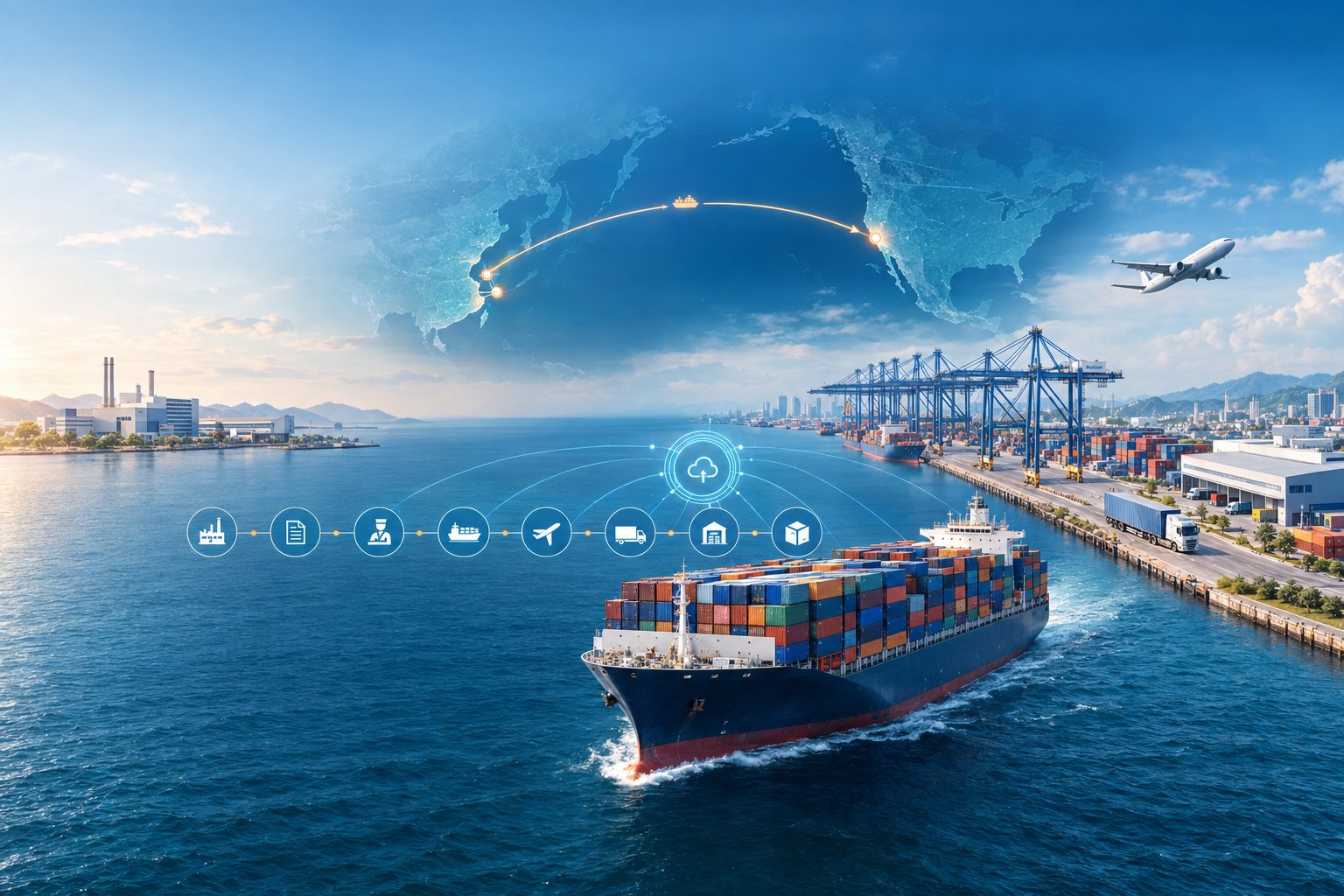
Container Shipping Rates China to USA: Costs, Ports, and Process

Container Shipping Rates China to USA – let’s get right to it. If you’re moving goods between these two giants, you need to know what you’ll pay and why.
Shipping from China to the United States is one of the busiest trade routes out there. If you’re planning to import, understanding container shipping costs is crucial for your budget and planning.
Right now, container shipping rates from China to the USA run about \(2,100 for a 40-foot container to the West Coast, and close to \)3,350 if you’re aiming for the East Coast. Prices shift depending on the route, the season, and the wild swings of the market.
Container Shipping Rates China to USA change all the time. Supply and demand, fuel prices, and global shipping capacity all play a role.
The price gap between a 20-foot and 40-foot container usually sits at 20-25%. So, the bigger container gives you more bang for your buck per cubic foot.
Your total expense? It’s not just the container. You’ll need to factor in terminal handling, customs clearance, and fuel surcharges. Those extras can really add up.
If you want to make smarter import decisions, understanding how freight from China gets priced matters. It’s not just about the sticker price—it’s about all the moving parts.
Contents hide
2 Current Container Shipping Rates and Price Trends
2.1 Typical Costs for FCL and LCL Shipments
2.2 Recent Rate Fluctuations and Market Overview
2.3 Key Surcharges and Additional Fees
3 Major Ports and Popular Shipping Routes
3.1 Leading Chinese Export Ports
3.2 Top U.S. Destination Ports
3.3 Alternative and Less Congested Ports
4 Shipping Methods: FCL, LCL, Air, and Express
4.1 Full Container Load (FCL) Explained
4.2 Less Than Container Load (LCL) Shipping
4.3 Container Shipping Rates China to USA: Air Freight and Express Delivery Options
4.4 Sea Transportation Versus Air Shipping
5 Cost Components and How Shipping Fees Are Calculated
5.1 Port Handling and Documentation Fees
5.2 Fuel Surcharges and Seasonal Adjustments
5.3 CBM, Chargeable Weight, and Other Pricing Factors
6 Customs, Duties, and Compliance Requirements
6.1 Customs Clearance Processes and Fees
6.2 Key Documentation and Certifications
6.3 Duties, Taxes, and HS Code Classification
7 Cost-Saving Strategies and Choosing the Right Logistics Solution
7.1 Door-to-Door vs. Port-to-Port Shipping
7.2 When to Use DDP and Other Incoterms
7.3 How to Get the Cheapest Shipping Rates
7.4 Working with Freight Forwarders and Getting Quotes
8.2 How do FCL and LCL shipping options compare in price and when should each be used?
8.3 How do port-to-port, door-to-door, and door-to-port services affect the final shipping price?
8.4 What are the typical transit times by ocean freight and how do schedule delays impact costs?
https://www.youtube.com/watch?v=TfWRg4WjOpA
RELATED Shipping Rates China to USA: Costs, Methods & Key Charges Explained
Key Takeaways
Container shipping from China to the USA costs between $2,100 and $3,350 per 40-foot container, depending on where you’re sending it.
Total costs include the base freight rate plus fuel, terminal handling, customs, and paperwork fees.
Choosing the right shipping method and keeping an eye on rate swings can save you money and headaches.
RELATED China to USA Shipping Cost: 2026 Rate Guide and Factors Affecting Freight Prices
Current Container Shipping Rates and Price Trends
Container Shipping Rates China to USA depend on size, shipping method, and the market’s mood. Prices can spike or settle, based on seasonal demand or global trade news.
Typical Costs for FCL and LCL Shipments
Your container shipping rates hinge on whether you pick full container load (FCL) or less than container load (LCL). For FCL shipments, a 20-foot container usually runs from $1,500 to $3,500 from China’s big ports to US destinations.
A 40-foot container? Expect $2,000 to $5,000. High cube 40-footers go for $2,200 to $5,500. If you don’t have enough for a whole container, LCL shipments cost $50 to $150 per cubic meter.
This LCL option fits when your cargo isn’t enough to fill a container. Ocean freight costs from Shanghai, Ningbo, or Yantian to Los Angeles or Long Beach are usually lower than rates to the East Coast.
West Coast trips take 14-21 days, while East Coast deliveries can stretch 25-35 days. That’s a big difference if you’re on a deadline.
Recent Rate Fluctuations and Market Overview
Asia-US container rates ticked up by 2-4% in late May 2025 as carriers scrambled to handle extra bookings. The FBX01 index tracks 40-foot container prices from China and East Asia to North America’s West Coast, using a mountain of data each month.
Shipping rates can swing on tariffs, port congestion, and seasonal surges. Some lanes have steadied after wild swings from trade policies and global economics. Most rates are only good for about a month, so don’t blink or you’ll miss the best deal.
Key Surcharges and Additional Fees
The base ocean freight is just the start. You’ll also face mandatory fees like fuel surcharges, which change monthly and tack on another 10-25% to your rate.
Peak season surcharges—think $500 to $2,000 per container—hit during the August to October rush. Ouch.
Common extras:
Port congestion charges: $200-$800
Documentation: $50-$150
Customs clearance: $100-$300
Terminal handling at destination: $300-$600
Chassis rental: $25-$50 a day
When you ask for a container shipping quote, double-check what’s included. Some carriers roll fees together, others break them out—so comparing rates can get confusing fast if you don’t know the full story.
RELATED Sea Shipping From China To USA: Complete Guide To Ocean Freight Services And Transit Times
Major Ports and Popular Shipping Routes
The main shipping lanes from China to the US tie together China’s biggest export hubs with major US ports on every coast. Where your cargo lands affects your costs, your timing, and your sanity.
Leading Chinese Export Ports
Port of Shanghai is China’s biggest container port, and maybe the busiest in the world. If you’re shipping big volumes, odds are you’re starting here.
Port of Ningbo-Zhoushan is another heavyweight in eastern China. It’s a go-to for competitive rates and massive throughput.
Port of Shenzhen sits near Hong Kong and deals in electronics, textiles, and all kinds of consumer goods. A lot of routes to the USA start here.
Port of Qingdao serves northern China and Shandong Province. Port of Guangzhou is another major player in the south, close to manufacturing clusters.
Top U.S. Destination Ports
Port of Los Angeles takes in the most containers from China. Port of Long Beach is right next door, and together, they’re a powerhouse.
West Coast ports give you the shortest ocean transit times—usually 12-16 days. Once your cargo arrives, it moves quickly by rail or truck to distribution centers.
Port of Savannah is a big East Coast player, feeding the Southeast and Midwest. Port of Houston is the main Gulf Coast entry point, with direct lines to the central US.
Other key ports: New York/New Jersey, Seattle, and Oakland.
Alternative and Less Congested Ports
Major ports get jammed up, especially in peak season. That can mean days or weeks of delays. Sometimes, smaller or alternative ports are the smarter play.
The Port of Oakland is a West Coast option with less congestion than LA or Long Beach. On the East Coast, Charleston and Norfolk handle growing volumes without the same bottlenecks.
Tacoma in Washington offers good rates and solid rail links inland. The Port of Mobile in Alabama is a Gulf Coast alternative, with new container facilities and shorter waits.
Sure, these smaller ports might add a detour, but if you want to dodge congestion, they’re worth a look—especially during the shipping rush.
RELATED Shipping Quote China to USA: Costs, Methods, and Timelines
Shipping Methods: FCL, LCL, Air, and Express
When shipping from China to USA, you get four main choices—each with its own trade-offs. FCL is best for big loads, while LCL lets you share space if you don’t fill a container.
Full Container Load (FCL) Explained
FCL shipping means you rent the whole container—20 or 40 feet—just for your stuff. You pay a flat rate whether the box is packed or half-empty.
FCL makes sense if your cargo hits 15 cubic meters or more. It’s usually faster since you skip the consolidation shuffle at the port, and your goods stay together the whole trip.
Why FCL?
Lower cost per unit for big shipments
Faster than LCL
Less handling, so less risk of damage
No sharing space with strangers’ goods
Container shipping rates for FCL can range from $500 to $3,000+ depending on route and season. You get more control over loading and unloading, which just makes life easier.
Less Than Container Load (LCL) Shipping
LCL lets you pay for just the space you use inside a shared container. Your cargo gets bundled with other shipments at the origin, then split up at the destination.
If you’re under 15 cubic meters, LCL is usually the way to go. LCL usually adds a week or two to your shipping time compared to FCL, since there’s more handling involved.
More touchpoints mean a slightly higher risk of damage, and you’ll pay more per cubic meter than FCL. But you don’t have to pay for empty space, so it balances out.
Freight forwarders are the pros who juggle all the coordination for LCL, combining goods from different customers into one box.
LCL in a nutshell:
Good for small loads
More handling, so more risk
Slower than FCL
Flexible if your shipment size changes
Container Shipping Rates China to USA: Air Freight and Express Delivery Options
Let’s get right to it—if you’re looking for Container Shipping Rates China to USA, you’ll notice air freight rates usually sit around $3 to $5 per kilogram for standard service. Air freight is quick, but not always cheap. Express shipping with DHL, UPS, or FedEx costs about $5 per kilogram for packages up to 150 kg.
Standard air freight typically takes 8 to 10 days for China to USA shipping. Express delivery can cut this down to just 3 days, which is a lifesaver for urgent shipments.
You’ll pay a premium for speed, but you also get faster customs clearance and door-to-door convenience. Air freight starts to compete with sea shipping once your shipment hits 150 to 500 kg.
Lightweight items might get charged based on dimensional weight, not just the actual weight. It’s always worth double-checking how your carrier calculates fees.
When to choose air:
Urgent deadlines
High-value goods
Perishable products
Shipments under 500 kg
Sea Transportation Versus Air Shipping
Sea transportation takes about 30 to 40 days for door-to-door delivery. But if you’re shipping heavy cargo, it’s usually the cheapest way to go for Container Shipping Rates China to USA.
If your shipment goes over 500 kg, ocean freight almost always beats air freight on price. Here’s a quick breakdown by weight:
| Shipment Size | Best Option | Typical Cost |
|---|---|---|
| Under 150 kg | Express shipping | ~$5/kg |
| 150-500 kg | Air freight | ~$3-5/kg |
| Over 500 kg | Sea (LCL/FCL) | Varies by volume |
Air shipping is all about speed and reliability for smaller loads. Sea transportation gives you massive savings for big shipments—if you can wait.
Port congestion and weather delays hit ocean freight more often than air. Still, sea shipping lets you move huge volumes at a fraction of the air freight cost per unit.
RELATED China to USA Shipping: Complete Guide for Success
Cost Components and How Shipping Fees Are Calculated
Container Shipping Rates China to USA aren’t just about the ocean freight. Shipping fees include port handling, terminal charges, fuel surcharges, and a bunch of other little extras.
Port Handling and Documentation Fees
Port fees cover moving your container through the terminals in both China and the US. This includes loading, unloading, and shuffling containers around the port.
You’ll pay these fees both at departure and arrival. Documentation charges cover all the international shipping paperwork—bill of lading, customs forms, and inspection certificates.
Port handling fees usually range from $200 to $500 per container, depending on the port. Some ports list terminal handling charges (THC) separately, and you might see wharfage fees based on weight or value.
Fuel Surcharges and Seasonal Adjustments
Fuel surcharges change with global oil prices. Shipping lines call this the bunker adjustment factor (BAF).
If oil prices jump, your surcharge goes up—sometimes by hundreds of dollars. Peak season surcharges also kick in during high-demand months, usually August to October, when retailers stock up for holidays.
During these months, you might pay an extra $1,000 to $2,000 per container. Carriers sometimes add currency adjustment factors if exchange rates swing wildly.
CBM, Chargeable Weight, and Other Pricing Factors
Container shipping rates depend on whether you’re shipping a full container load (FCL) or less than container load (LCL). FCL means you pay a flat rate for the whole container, no matter how full it is.
LCL shipments get charged by cubic meter (CBM) or chargeable weight. To figure out CBM, multiply length, width, and height in meters. A handy CBM calculator can save you some math headaches.
Chargeable weight is either the actual or volumetric weight—whichever’s higher. LCL sea freight costs usually run $50 to $150 per CBM.
Other factors include cargo type, insurance needs, and whether you need a refrigerated container for temperature-sensitive stuff.
RELATED Shipping Freight From China to the USA: Essential Guide for Import Businesses
Customs, Duties, and Compliance Requirements
Importing containers from China to the USA means getting customs clearance right, having the right paperwork, and paying all duties and taxes. Knowing your HS codes, certifications, and customs clearance fees helps you avoid headaches and surprise costs.
Customs Clearance Processes and Fees
Customs clearance means submitting documents to US Customs and Border Protection (CBP) before your container gets released. You have to file an Importer Security Filing (ISF) at least 24 hours before your ship leaves China.
Miss this deadline and you risk penalties starting at $5,000 per violation. Your customs broker files the entry summary (CBP Form 7501) and pays duties for you.
Standard customs clearance fees include the Merchandise Processing Fee (MPF), which is 0.3464% of cargo value—minimum $27.75, max $538.40 per entry. The Harbor Maintenance Fee (HMF) adds another 0.125% of cargo value.
Brokers usually charge $100 to $200 per entry for their services. If CBP picks your container for inspection, expect $300 to $600 in extra fees, depending on container size and location.
Key Documentation and Certifications
Your commercial invoice needs to show product details, quantities, unit prices, total value, and supplier info. This document sets your duty rate. The bill of lading proves ownership and shows shipping details for customs.
Sometimes you’ll need a certificate of origin to get trade agreement benefits or meet marking rules. Safety certifications vary—electronics need FCC, toys need CPSC, and food imports require FDA approval.
Packing lists help customs verify what’s inside during inspections. Keep paperwork accurate and consistent to avoid delays or fines.
Duties, Taxes, and HS Code Classification
Your HS code determines your duty rate. These codes classify your product for international trade. Getting customs fees right starts with using the proper HS code, which can mean anything from duty-free to over 25% depending on what you’re importing.
Section 301 tariffs add another 7.5% to 25% on many Chinese goods. Double-check if your products are on that list when figuring out your landed cost.
Landed cost = product cost + shipping + insurance + duties + taxes + all fees to your warehouse. DDP shipping from China to USA means your supplier pays everything and delivers goods ready for you, but usually at a higher price than FOB, where you control the shipping.
RELATED Shipping Freight from China to US: Methods, Costs & Essential Guide
Cost-Saving Strategies and Choosing the Right Logistics Solution
Reducing Container Shipping Rates China to USA takes a bit of strategy. Choosing the right shipping option and incoterms can help you keep costs down, and the right logistics partner can make a big difference.
Door-to-Door vs. Port-to-Port Shipping
Door-to-door shipping covers everything—from your supplier in China to your warehouse in the USA. This includes pickup, export customs, ocean freight, import customs, and final delivery.
You’ll pay more upfront, but you skip the hassle of juggling multiple providers. Port-to-port shipping only covers the ocean leg between Chinese and US ports. You handle inland transport, customs, and final delivery.
Door-to-door is great if you want simplicity or don’t have much logistics experience. Port-to-port can save money if you already have trucking and customs contacts in place.
When to Use DDP and Other Incoterms
DDP (Delivered Duty Paid) means your supplier handles everything until your goods arrive at your place. They pay for shipping, insurance, customs, and taxes.
You get your products ready to use, but you’ll pay more for the convenience. FOB (Free on Board) puts you in charge once goods are loaded in China, letting you pick carriers and manage costs.
CIF (Cost, Insurance, and Freight) means the supplier pays for shipping and insurance to the US port, but you handle customs and delivery after that. DDP is handy for small shipments or if customs is a mystery to you. FOB or CIF is better for regular imports where you want to control logistics and costs.
How to Get the Cheapest Shipping Rates
Want the lowest Container Shipping Rates China to USA? Book during the off-season, not around Chinese New Year or late summer when prices spike.
Try consolidating smaller shipments into full containers. A 40ft container costs just 20–25% more than a 20ft but holds double the cargo, so fill it up if you can.
Collect quotes from several providers and negotiate if you ship often. Booking early often gets you better rates, and if you can wait, slower transit times are cheaper than express.
Working with Freight Forwarders and Getting Quotes
Freight forwarders can handle the whole shipping process and usually get you lower rates thanks to their carrier relationships.
A good forwarder manages your paperwork, customs, and delivery. Always ask for quotes that break down every charge—ocean freight, fuel, terminal fees, customs, and inland delivery.
Don’t just look at the base rate. Make sure insurance is included and ask about storage fees or rate changes if there are delays. Clear communication with your forwarder is key for tracking and solving any issues fast.
About AEB Logistics
Container Shipping Rates China to USA are a top concern for businesses moving goods across the Pacific. AEB Logistics specializes in freight forwarding services for companies shipping containers from China to the USA.
The team offers both FCL and LCL options, keeping pricing transparent and support personal. You’ll find port-to-port and door-to-door shipping options, with competitive rates on routes from Shanghai, Shenzhen, and Ningbo to Los Angeles, New York, and more.
AEB Logistics manages customs documentation and lets you track your shipment in real time. They aim to make the shipping process as smooth as possible.
RELATED Freight Shipping from China to USA: Methods, Costs & Key Steps
Frequently Asked Questions
Container Shipping Rates China to USA shift a lot based on container type, route, timing, and regulations. Knowing what drives these costs helps you plan and avoid surprises.
What factors most influence the total cost of shipping a container from China to the United States?
Your shipping method makes the biggest difference in cost. Ocean freight rates swing widely depending on FCL or LCL, with prices from $1,200 to $5,500, depending on container size and where you’re sending it.
Departure and arrival ports matter a lot. Sending to West Coast ports like Los Angeles usually costs less than shipping to the East Coast, since ships have to travel farther and often pass through the Panama Canal, adding both time and money.
Season plays a big role too. Peak shipping periods—August through October and right before Chinese New Year—can bump prices up by 20-40%. If you can, book during quieter months to save.
Container size and type affect the total. A 20-foot container is cheaper, but the cost per cubic meter drops if you go bigger. High cube containers cost a bit more but give extra headroom.
Fuel costs sneak in through bunker adjustment factors. When oil prices climb, shipping lines tack on surcharges that change every month or quarter.
How do FCL and LCL shipping options compare in price and when should each be used?
FCL works out cheaper once your shipment goes past 15 cubic meters. You pay one flat rate for the whole container, so the more you fill it, the better the deal. FCL also moves faster since there’s no need for consolidation.
LCL shipping charges between $50 and $150 per cubic meter, which suits smaller loads. You share the container and only pay for your portion. If your shipment is under 15 cubic meters or you need flexibility, LCL makes sense.
Security can tip the balance. FCL containers get sealed at the supplier’s factory and stay sealed until arrival. LCL cargo gets handled more, which can bump up the risk of damage or loss.
Transit time’s another factor. FCL shipments usually reach you 3-7 days faster than LCL, since they skip the warehouse steps. If you need goods quickly, paying extra for FCL might be worth it—even for smaller shipments.
How do port-to-port, door-to-door, and door-to-port services affect the final shipping price?
Port-to-port service gives you the lowest base price, but you handle inland transport yourself. That means booking trucks from the supplier to the Chinese port and from the U.S. port to your warehouse. It’s more work, but you get more control.
Door-to-door costs more up front, but your freight forwarder does it all—pickup, export clearance, ocean transit, import clearance, and final delivery. This can save you hassle, and sometimes even money, compared to piecing it together yourself.
Door-to-port is a middle ground. The forwarder arranges pickup in China and gets your cargo to the U.S. port, then you handle the rest. If you already have good U.S. trucking partners but want help in China, this can work well and cost less than full door-to-door.
Where your warehouse sits in the U.S. changes things, too. Deliveries near big ports might add \(200-500 per container. If you’re far inland, drayage and trucking can tack on \)1,000-2,000 more.
What are the typical transit times by ocean freight and how do schedule delays impact costs?
West Coast routes usually take 13-18 days port-to-port. Shanghai to Los Angeles averages 13-16 days, while Shenzhen to LA is more like 14-18. Add 10-15 days for inland transport and customs if you’re going door-to-door.
East Coast shipments take longer—28-36 days on the water. Shanghai to New York via the Panama Canal can stretch to 28-35 days, and total door-to-door time often hits 40-50 days. Savannah and Charleston are similar.
Weather doesn’t always cooperate. Pacific typhoons or Atlantic hurricanes can tack on days. Usually, these delays don’t raise your ocean freight bill, but storage fees might pile up if your container sits at the port too long.
Port congestion is a headache. Ships waiting for a berth can delay your cargo by a week or more. Missed connections or demurrage charges for late pickup can push your costs higher.
Customs inspections are a wild card. U.S. Customs and Border Protection might hold your cargo for 3-14 days. You can’t really predict these, so it’s smart to build in some buffer time to avoid running out of stock.
Which surcharges and accessorial fees should be expected on a container shipment and how are they calculated?
Bunker adjustment factors cover fluctuating fuel prices. Shipping lines add these as a percentage of your base rate or a flat fee per container. You’ll see this on every shipment.
Peak season surcharges kick in during busy months—August to October and before Chinese New Year. Carriers add $500-1,500 per container to manage the rush. Shipping during slow months helps you dodge these fees.
Currency adjustment factors protect carriers from exchange rate swings. These update monthly and usually run 1-3% of your freight cost. They’ll show up as separate line items.
General rate increases happen when carriers bump up base prices across the board. Unlike other surcharges, these stick around for good. Carriers usually announce them a few weeks ahead.
Customs filing fees cover the paperwork for U.S. entry. AMS and ISF filings cost $25-50 each and need to be done before your ship leaves China. Your freight forwarder or customs broker will handle these, but you’ll see the cost passed on.
Container freight station fees apply to LCL shipments for the work of consolidating and deconsolidating cargo. Plan on $75-200 per shipment at both origin and destination. These fees pay for the hands-on labor with shared containers.