Door-to-Door Shipping Quotes China to USA: Complete Guide & Cost Factors

If you’re searching for door-to-door shipping quotes China to USA, you’re probably feeling a bit lost in all the details. It’s not exactly simple to compare freight forwarders, figure out what’s actually included, or even know if you’re getting a fair deal.
Door-to-door shipping quotes China to USA usually range from $3 to $8 per kilogram for air freight, and $800 to $3,000 per container for sea freight. These numbers shift depending on your shipment’s size, the shipping mode, and whether your quote covers duties and taxes.
Good quotes should include everything from pickup at your supplier’s factory in China, through customs clearance and final delivery to your US address. Anything less, and you might be on the hook for unexpected costs later.
Door-to-door shipping quotes China to USA depend on a few key factors. Things like weight, volume, shipping speed, and fuel surcharges all play a role.
If you choose DDP service, your freight forwarder handles all customs duties and taxes for you. For small businesses and first-time importers, door-to-door shipping is often worth it just for the peace of mind—no need to coordinate multiple carriers or wrestle with customs yourself.
This guide digs into how to get reliable door-to-door shipping quotes China to USA, what to ask your freight forwarder, and how to dodge those sneaky hidden fees. Let’s get into the details that actually matter for your timeline and budget.
Contents hide
2 What Is Door-to-Door Shipping and How Does It Work?
2.1 Definition and Process Overview
2.2 Differences From Port-to-Port and Other Shipping Models
2.3 Key Players in the End-to-End Journey
3 Shipping Modes and Service Providers
3.1 Sea Freight: FCL and LCL Options
3.2 Air Freight and Express Shipping
3.3 Choosing a Freight Forwarder or Courier
3.4 Amazon FBA and Specialized Logistics Solutions
4 Understanding Costs and Pricing Variables
4.1 Freight Charges and Service Inclusions
4.2 Volumetric and Chargeable Weight Calculation for Door-to-Door Shipping Quotes China to USA
4.3 Additional Fees: Fuel, Pickup, and Port Congestion
4.4 Comparing All-Inclusive Versus Itemized Door-to-Door Shipping Quotes China to USA
5 Customs Clearance and Documentation for Door-to-Door Shipping Quotes China to USA
5.1 U.S. and Chinese Customs Procedures
5.2 Essential Shipping Documents
5.3 Import Duties, Taxes, and Broker Roles
5.4 Handling HS Codes and Importer of Record Obligations
6 Comparing DDP, DAP, FOB, CIF, FAS, and EXW for Door-to-Door Shipping Quotes China to USA
6.1 Incoterms Explained for International Shipments
6.2 Who Pays Duties, Taxes, and Fees?
6.3 Determining the Best Terms for Your Shipment
7 Key Tips for Faster, Safer, and More Predictable Door-to-Door Shipping Quotes China to USA
7.1 Door-to-Door Shipping Quotes China to USA: Peak Seasons, Transit Time, and Lead Time Planning
7.2 Freight Insurance and Cargo Protection
7.3 Real-Time Tracking and Last-Mile Considerations
9.1 What information do I need to provide to get an accurate door-to-door shipping quote?
9.2 How do shipping costs typically break down between freight, duties, taxes, and destination fees?
9.3 How do volumetric weight and package dimensions affect the final quoted price?
9.5 Does a door-to-door quote usually include customs clearance, and what documents are required?
https://www.youtube.com/watch?v=FD-z0EthgfU
RELATED Door-to-Door Shipping Rates China to USA: Costs, Methods, and Key Considerations
Key Takeaways
Door-to-door shipping quotes China to USA include pickup in China, international freight, customs clearance, and delivery to your US address in one price.
Air freight costs more per kilogram but gets your goods there in 3-8 days. Sea freight is cheaper for bulk shipments but takes 25-40 days.
Pick DDP service if you want your freight forwarder to handle all customs duties and taxes—no surprise fees at delivery.
RELATED Best Shipping Quotes China to USA: Cost, Times & Solutions
What Is Door-to-Door Shipping and How Does It Work?
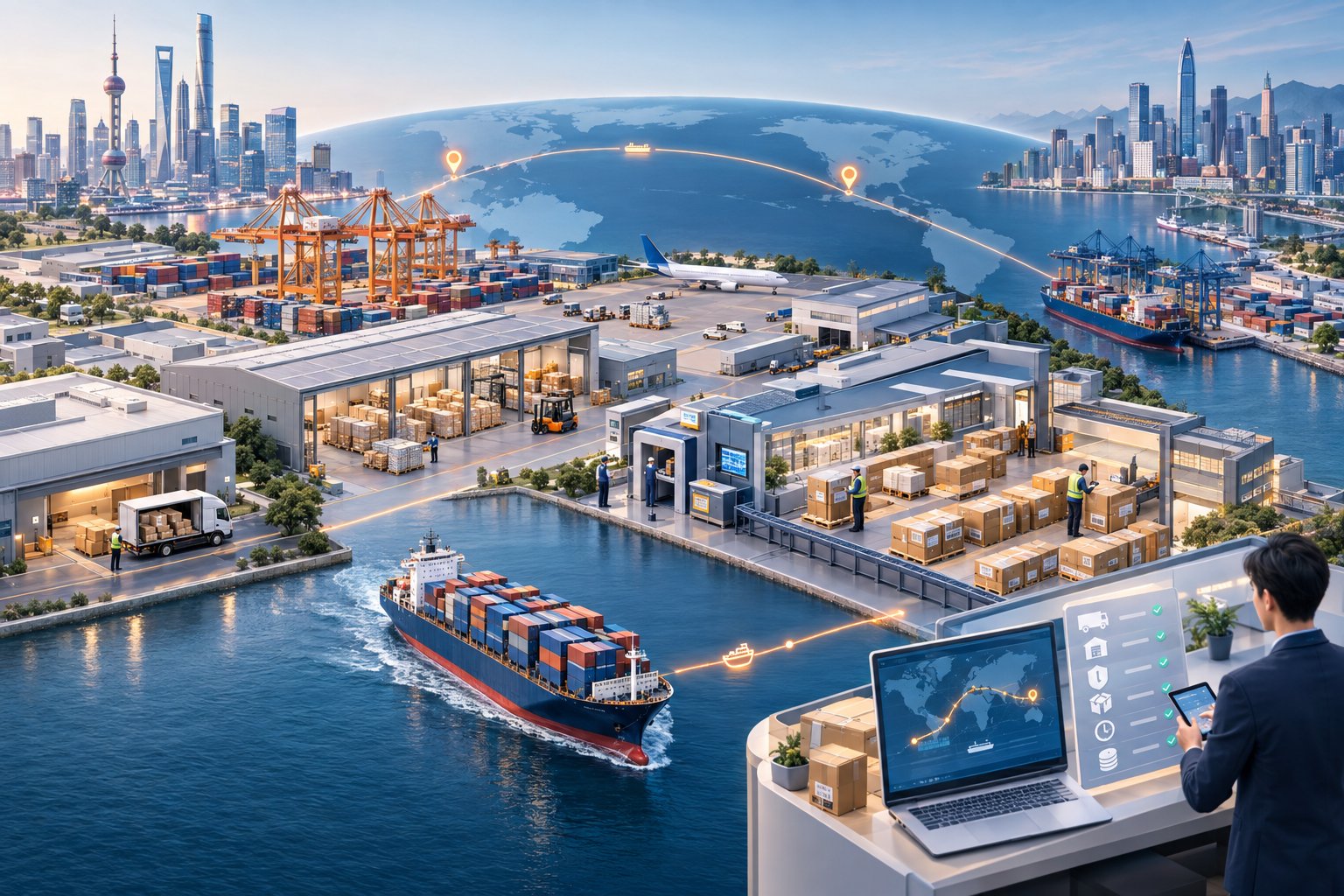
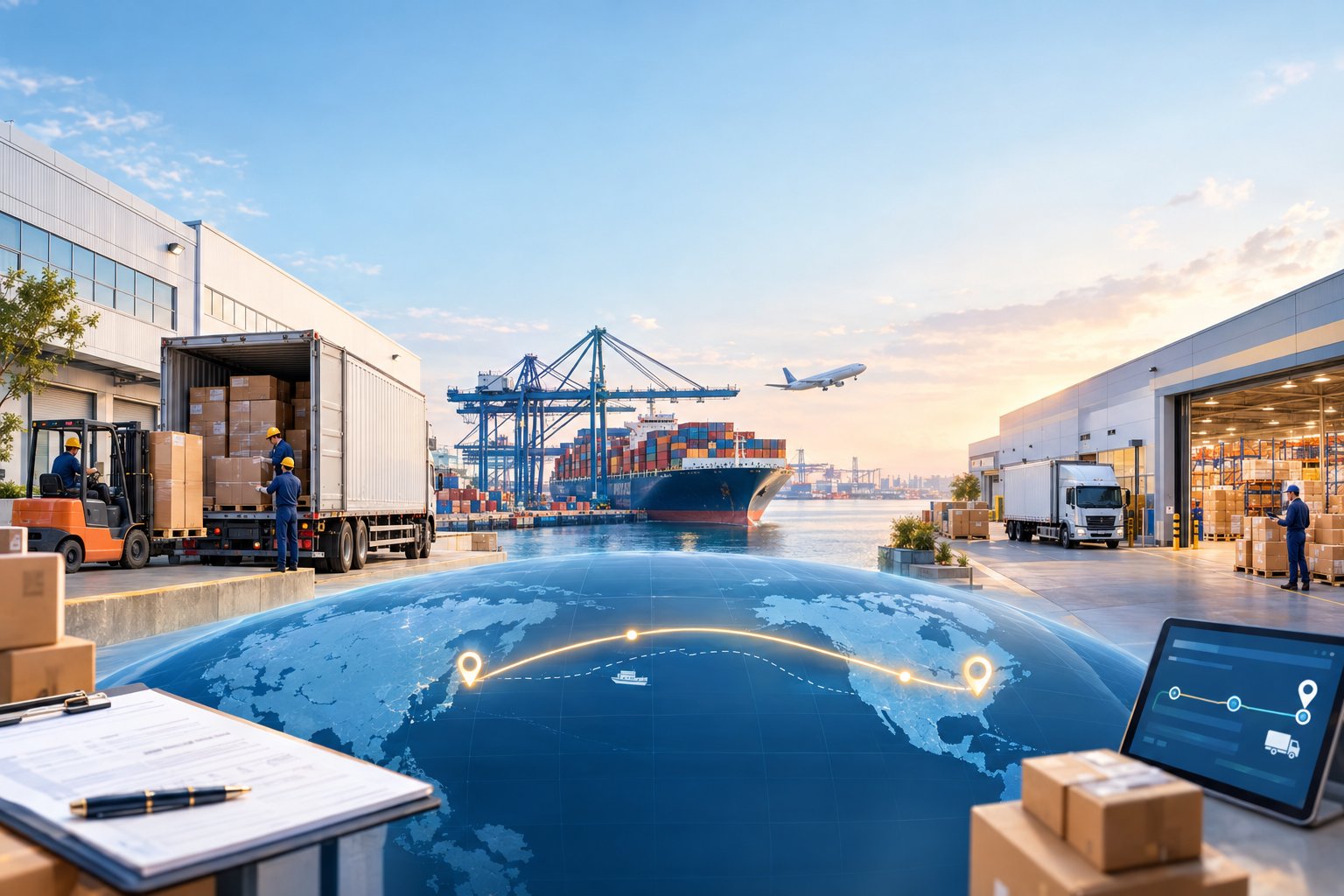
Door-to-door shipping quotes China to USA cover your shipment from pickup at the supplier’s spot in China to delivery at your US address. One logistics partner manages everything—customs clearance, transportation, and final delivery. That means you won’t have to juggle multiple service providers.
Definition and Process Overview
Door-to-door shipping is a full logistics service where a freight forwarder takes care of the whole journey. It starts when the logistics partner picks up goods from your supplier’s warehouse in China.
The forwarder handles export customs paperwork and arranges transport to a Chinese port or airport. After that, your shipment heads overseas by ocean or air freight and lands in the US.
Once your goods arrive, the freight forwarder coordinates US customs clearance. You, or your business, usually act as the importer of record. If you choose DDP terms, the logistics partner pays duties and taxes on your behalf.
Final delivery takes your shipment from the port to your warehouse, distribution center, or even Amazon FBA. This end-to-end service keeps things simple by removing the hassle of dealing with multiple carriers and customs brokers.
Differences From Port-to-Port and Other Shipping Models
Port-to-port shipping just covers the ocean or air leg between two ports. You’re responsible for pickup, customs, and final delivery. That’s a lot to coordinate.
Door-to-port includes pickup from the supplier and delivery to the destination port, but you still handle customs and last-mile delivery. Port-to-door starts at the origin port and includes customs clearance and final delivery, but not the initial pickup.
Door-to-door shipping quotes China to USA give you the most complete service. One logistics partner manages everything, so you only deal with a single invoice and fewer headaches.
Key Players in the End-to-End Journey
Your freight forwarder is the main coordinator, managing all the other service providers. They book cargo space with ocean carriers or airlines, arrange trucking for pickup and delivery, and work with customs brokers.
Key players include:
Origin trucking company – Picks up from your Chinese supplier
Customs broker – Handles export paperwork in China and import docs in the US
Ocean carrier or airline – Moves your cargo overseas
Destination trucking company – Delivers to your warehouse or distribution center
Port authorities – Manage cargo at both ends
Major providers like DHL Express, FedEx International, and UPS Worldwide run door-to-door networks worldwide. Your freight forwarder is your go-to contact, tracking your cargo and handling any hiccups along the way.
RELATED Shipping Quote China to USA: Costs, Methods, and Timelines
Shipping Modes and Service Providers
When you’re looking for door-to-door shipping quotes China to USA, you’ll see different shipping modes. Each one has its own pros depending on your cargo size, budget, and how fast you need delivery.
Sea Freight: FCL and LCL Options
Sea freight is usually the cheapest option for shipping from China to USA, especially for big shipments or if you’re not in a rush. You can pick Full Container Load (FCL) or Less than Container Load (LCL) depending on how much you’re shipping.
FCL is best if you’ve got enough goods to fill a 20-foot or 40-foot container. You pay for the whole container, even if you don’t use all the space, but your cargo isn’t mixed with anyone else’s. That cuts down on damage and speeds things up at the destination port.
LCL lets you share container space with other shippers when your load is too small for a full container. Your freight forwarder consolidates cargo in China and deconsolidates it at the US port. LCL usually costs less up front for smaller loads, but it adds 4-7 days to your transit time because of the extra handling.
Sea freight transit times run from 18 to 35 days, depending on which US port you use and if you pick FCL or LCL.
Air Freight and Express Shipping
Air freight gets your cargo to the US in 3-7 days. It’s great for urgent shipments or high-value products that justify the price. Airlines charge based on actual or volumetric weight, whichever is higher.
Express shipping with DHL, FedEx, or UPS is even faster—usually 2-5 days door-to-door. These couriers handle customs and offer end-to-end tracking. Express costs a lot more per kilogram, but you don’t have to worry about finding separate customs brokers or last-mile delivery.
Use air freight when you need speed but have bigger shipments that make express too pricey. Express is best for samples, replacement parts, or small packages under 100 kg where speed trumps cost.
Choosing a Freight Forwarder or Courier
A freight forwarder manages the entire door-to-door shipping process—from pickup in China to delivery at your US address. They negotiate with carriers, prep documents, arrange customs, and coordinate inland transport.
Pick forwarders with strong networks in both China and the USA. They should give you clear quotes that break out ocean or air freight, customs, and inland delivery so you know your landed cost upfront.
Couriers like DHL, FedEx, and UPS quote all-inclusive door-to-door rates, which is super convenient for small shipments. But if your cargo is over 200-300 kg, their prices usually aren’t as competitive.
Ask your service providers about their experience with your type of product and if they can handle any special compliance requirements for US customs.
Amazon FBA and Specialized Logistics Solutions
Amazon FBA shipping from China needs special handling to meet Amazon’s strict receiving rules. Your freight forwarder must deliver palletized cargo with the right labels, carton sizes, and advance shipping notices.
Lots of forwarders offer FBA-specific services, including prep work, labeling, and scheduling appointments at Amazon fulfillment centers. They know Amazon’s packaging standards and can help you avoid common rejection headaches.
You can ship directly to Amazon warehouses or use a US prep center as a pit stop. Going direct is cheaper but risky if your packaging isn’t perfect. Prep centers cost extra but give you a chance to fix any issues before final delivery.
FBA shipments work for both sea freight (big restocks) and air freight (fast-moving products that need quick replenishment).
RELATED Door-to-Door Shipping China to USA Case Study: Real-World Insights and Lessons
Understanding Costs and Pricing Variables
Door-to-door shipping quotes China to USA depend on a bunch of pricing factors. How carriers calculate weight, which services are included, and all sorts of surcharges can change your total landed cost. Knowing what to look for helps you avoid nasty surprises.
Freight Charges and Service Inclusions
Your freight costs make up the biggest part of your shipping quote. The base rate depends on your method—air, sea, or express.
Door-to-door shipping rates usually range from $3 to $8 per kilogram for air freight. Ocean freight costs less per unit, but it takes longer.
Service inclusions can vary a lot. A DDP (Delivered Duty Paid) quote covers everything from pickup at your supplier in China to customs clearance and final delivery in the US. DDP door-to-door shipping wraps up all duties, taxes, and last-mile delivery in one price.
Some quotes only cover port-to-port shipping. In that case, you’ll need to pay separately for pickup in China, customs clearance in the US, and delivery from the port to your address.
Always double-check what’s included in your quote before you compare prices. Otherwise, you might end up paying more than you expected.
Volumetric and Chargeable Weight Calculation for Door-to-Door Shipping Quotes China to USA
Door-to-Door Shipping Quotes China to USA always depend on how carriers calculate your shipping cost. They charge by chargeable weight, which is whichever is higher: your package’s actual weight or its volumetric weight.
This approach stops people from shipping huge boxes that barely weigh anything for cheap.
For air freight, you figure out volumetric weight by multiplying length × width × height in centimeters, then dividing by 6,000.
If you’re shipping by ocean freight, you use CBM (cubic meter) and divide by 1,000,000 instead.
Let’s say you have a carton measuring 50cm × 40cm × 30cm. That comes out to a volumetric weight of 10 kg for air (50 × 40 × 30 ÷ 6,000).
If your carton actually weighs just 8 kg, you still pay for 10 kg because that’s higher.
For ocean freight, pricing usually goes by CBM, not weight. That same carton is 0.06 CBM (50 × 40 × 30 ÷ 1,000,000).
Additional Fees: Fuel, Pickup, and Port Congestion
There’s more to Door-to-Door Shipping Quotes China to USA than just base freight costs. Several surcharges sneak in and affect your total quote.
A fuel surcharge is one of the big ones. It changes with oil prices and can tack on 10-25% to your freight cost.
Pickup fees depend on how close your supplier is to the port or airport. If your factory’s out in the middle of nowhere, expect to pay more.
Port congestion fees pop up during busy seasons or when terminals get clogged. You’ll notice these more from September to December and right before Chinese New Year.
Other fees might include terminal handling, documentation, and customs clearance. If your delivery address is outside a major city, you might get hit with a remote area surcharge too.
Professional freight forwarders try to calculate all these extras upfront so you get transparent pricing.
Comparing All-Inclusive Versus Itemized Door-to-Door Shipping Quotes China to USA
All-inclusive quotes bundle every cost into one total price for your shipment. This makes budgeting easier and helps you avoid surprise charges at customs or during last-mile delivery.
Itemized quotes split out each cost—freight, pickup, customs, duties, and delivery. These look more complicated, but you can see exactly where your money’s going.
All-inclusive quotes are great if you want predictable costs. Itemized ones are better if you like to know the details or want to negotiate specific services.
When you’re looking at different Door-to-Door Shipping Quotes China to USA, check that both options cover the same services. A lower itemized quote might not include duties or final delivery, which an all-inclusive one does.
Always ask for written quotes that spell out what’s included and what’s not. It’s the only way to avoid misunderstandings about your total landed cost.
RELATED Freight Shipping from China to USA: Methods, Costs & Key Steps
Customs Clearance and Documentation for Door-to-Door Shipping Quotes China to USA
When you’re shipping door-to-door from China to the USA, proper customs clearance is crucial. You need accurate paperwork and have to follow both Chinese export and U.S. import rules.
Knowing your responsibilities as the importer of record—and understanding duties, taxes, and product classifications—can save you from expensive delays or compliance headaches.
U.S. and Chinese Customs Procedures
Chinese customs wants an export declaration before your goods leave. Usually, your supplier or freight forwarder handles this by submitting commercial documentation and making sure there aren’t any export controls on your products.
Once your shipment lands in the U.S., customs clearance kicks in. Customs and Border Protection (CBP) checks your entry filing, might inspect your goods, and then figures out duties and taxes.
For most cargo, this process takes about 1-3 days. If CBP decides to physically examine your shipment, it could take up to a week.
Under DDP Incoterms, your forwarder manages both export and import procedures. With DDU or FOB, you’ll need your own customs broker to file entries and pay the fees.
Essential Shipping Documents
You’ll need a few key documents for compliant door-to-door shipping from China to USA:
Commercial invoice: Lists buyer, seller, item details, quantities, values, and Incoterms
Packing list: Shows carton count, weights, sizes, and what’s in each box
Bill of lading (ocean) or air waybill (air): Acts as proof of ownership and shipping agreement
Certificate of origin: Confirms manufacturing country and might lower duties if trade deals apply
Your customs broker or forwarder uses these to prep the CBP entry. If anything’s missing or wrong, your shipment can get held up or penalized.
Double-check that declared values match your supplier invoices and that product descriptions are detailed, not vague.
Import Duties, Taxes, and Broker Roles
Import duties are federal taxes calculated as a percentage of your goods’ declared value. The rate depends on the HS code for each product.
Some items enter duty-free, while others might have rates from 2% up to 25% or even higher.
Besides duties, you’ll pay a Merchandise Processing Fee (0.3464% of value, max $538.40) and a Harbor Maintenance Fee (0.125% for ocean shipments). Depending on where you’re shipping, state and local taxes could apply too.
A customs broker files your entry, figures out duties and taxes, and deals with CBP for you. DDP shipping arrangements usually include broker services in the quote, so you get your goods with all fees prepaid.
If you use other Incoterms, you’ll hire the broker separately and pay fees on arrival.
Handling HS Codes and Importer of Record Obligations
HS codes are six- to ten-digit numbers for classifying products. Getting these right is a must since they decide your duty rate and if your goods need special permits or FDA approval.
You can search the Harmonized Tariff Schedule on the U.S. International Trade Commission website. Your supplier might suggest a code, but always confirm with your customs broker.
If you misclassify, you risk penalties, back duties, or shipment delays.
As the importer of record, you’re legally responsible for accurate declarations, duty payments, and making sure your products comply. Even if your forwarder handles paperwork, CBP holds you accountable for violations.
Keep all your invoices, emails, and certifications for at least five years in case you get audited.
RELATED Essential Guide to Shipping from China to USA: Optimize Your Logistics
Comparing DDP, DAP, FOB, CIF, FAS, and EXW for Door-to-Door Shipping Quotes China to USA
Each shipping term changes who pays for what—freight, insurance, customs, and delivery. If you’re comparing Door-to-Door Shipping Quotes China to USA, it’s key to know which party handles each part to avoid surprise costs.
Incoterms Explained for International Shipments
DDP (Delivered Duty Paid) is the hands-off option. The supplier covers everything—freight, insurance, U.S. customs, import duties, and delivery to your door.
You get your goods ready to use, with zero logistics work on your end.
DAP (Delivered at Place) means the supplier handles the transport to your U.S. location but stops at customs. You take care of import clearance and pay duties and taxes.
FOB (Free on Board) puts responsibility on you once goods are loaded at the Chinese port. You arrange and pay for ocean freight, insurance, U.S. port charges, customs brokerage, duties, and delivery.
CIF (Cost, Insurance, and Freight) covers ocean transport and basic insurance to the U.S. port. You handle port fees, customs, duties, and final delivery.
FAS (Free Alongside Ship) has the supplier place goods next to the vessel at the port. You pay for loading, all freight, insurance, and everything after that.
EXW (Ex Works) gives you total control but also all the work. The supplier just makes the goods available at their factory—everything else is on you.
Who Pays Duties, Taxes, and Fees?
Duties and taxes can make up a big chunk of your landed cost when shipping to the U.S. With DDP shipping, the supplier pays all these fees. You get transparent pricing, but there might be a supplier markup or buffer in the quote.
For DAP, FOB, CIF, FAS, and EXW, you pay U.S. import duties and taxes yourself. You’ll need to classify your goods and calculate duties based on customs value.
Port and handling fees depend on the term. FOB and CIF quotes don’t include U.S. terminal handling charges, which can run $75–$300 per container. DDP and DAP usually include these in the price.
Customs brokerage is your job under FOB, CIF, FAS, EXW, and DAP. Expect $125–$200 for standard clearance. DDP usually bundles this in the supplier’s price.
Determining the Best Terms for Your Shipment
Pick DDP if you want things simple and predictable, especially for smaller shipments or if you’re new to importing. You’ll pay a bit more, but everything’s handled.
Go with FOB if you want more control—maybe you have a freight forwarder you trust or want to pick your own insurance. This works best for experienced importers who can negotiate better freight rates than suppliers.
CIF is a compromise: you get freight and insurance to the U.S. port, but handle the rest. Just make sure the insurance coverage is enough—suppliers often buy the bare minimum.
DAP is good if you want door delivery but still want to control customs and duty payments. You see your real import costs, not just supplier estimates.
EXW and FAS only make sense if you have solid logistics partners in China and want full control. For most importers, these terms just add hassle.
RELATED Shipping From China To The USA: Essential Guide For Import Logistics And Costs
Key Tips for Faster, Safer, and More Predictable Door-to-Door Shipping Quotes China to USA
Getting your goods from China to the USA isn’t just about paperwork—planning matters. Watch out for peak shipping seasons, get proper insurance, and track your shipment so you stay in control from start to finish.
Door-to-Door Shipping Quotes China to USA: Peak Seasons, Transit Time, and Lead Time Planning
Door-to-Door Shipping Quotes China to USA are heavily influenced by the time of year you ship your cargo. Peak seasons, especially from August through October, bring delays since retailers are scrambling to restock for the holidays.
During these busy months, you might see shipping delays of 1-2 weeks beyond what’s considered normal. It’s frustrating, but it’s just how the industry works during crunch time.
Air freight usually takes about 5-10 days for standard shipments. Ocean freight can stretch anywhere from 20-40 days, depending on which ports you’re using.
If your shipment is urgent, tack on an extra 7-10 days for customs clearance and possible port congestion. It’s better to be safe than sorry, honestly.
Schedule urgent shipments at least 30 days before you need them delivered. This buffer gives you some breathing room if anything goes sideways.
Book your shipping space early during peak seasons. Carriers tend to fill up fast, and rates can jump by 20-50% when demand is high.
Freight Insurance and Cargo Protection
Cargo insurance is your backup plan if goods get damaged, lost, or stolen. Standard carrier liability only covers $50-100 per package, which is almost never enough to cover your actual loss.
Freight insurance costs between 0.3-2% of your cargo’s value and covers nearly all international transport risks. Make sure your coverage matches the full value of your shipment—including product cost, shipping, and import duties.
Get your insurance certificates before your goods leave China. Some logistics providers toss in basic coverage, but you’ll need extra protection for high-value or fragile items like electronics.
Real-Time Tracking and Last-Mile Considerations
Real-time tracking systems let you follow your shipment every step of the way. Most logistics partners now offer GPS container tracking and regular updates at every checkpoint.
Last-mile delivery from the distribution center to your final destination is usually the trickiest part. This last leg can add 2-5 days to your shipping time, especially if you’re out in the sticks.
Pick carriers with solid domestic networks in the USA to keep your final delivery on track. Double-check that your delivery address is accessible for big trucks, especially for ocean freight containers.
Residential areas might need smaller vehicles, which can tack on extra time and cost. Always give accurate contact info so drivers can reach you if something comes up.
RELATED Ship from China to USA: Complete Guide to Methods, Costs & Customs
About AEB Logistics
AEB Logistics Co. is a global freight forwarding company specializing in shipping from China to USA. They handle air freight, ocean freight, express delivery, door-to-door, and DDP solutions for all kinds of businesses.
You get access to multiple shipping methods through one provider. That means you can compare options and pick what fits your budget and schedule, without chasing down different companies.
AEB Logistics serves everyone from small startups to big corporations. Their services aim to make international trade a bit less of a headache.
Key services include:
Full Container Load (FCL) and Less than Container Load (LCL) ocean freight
Air freight for time-sensitive shipments
Express courier coordination with major carriers
Door-to-door delivery with customs clearance
DDP terms for all-inclusive pricing
The company is big on transparency for both pricing and delivery timelines. You get one main contact who manages your shipment from pickup in China to delivery in the USA.
AEB Logistics takes care of the paperwork, customs, and compliance stuff. That’s a lifesaver if you’re new to importing or don’t have your own logistics crew.
They know Amazon FBA shipping inside out, so they’re a solid choice for e-commerce sellers. They get the nuances of scheduling and labeling for fulfillment centers.
You can request quotes for different shipping modes and see what fits your needs best. They also provide tracking and keep you posted throughout the process.
RELATED Door-to-Door Shipping Rates China to USA: Costs, Methods, and Key Considerations
Frequently Asked Questions
Getting Door-to-Door Shipping Quotes China to USA means you’ll need to provide some details about your cargo and what you want. Most quotes cover freight charges, but how they handle duties, taxes, and extra fees can vary quite a bit.
What information do I need to provide to get an accurate door-to-door shipping quote?
Share your cargo’s weight, dimensions, and value to get a real quote. Forwarders calculate costs based on whichever is higher—actual or volumetric weight.
Pickup and delivery addresses matter a lot since they affect trucking costs. Remote or rural spots usually add $50 to $300 in extra fees.
Let them know your preferred shipping method—sea freight FCL, LCL, air freight, or express courier. Each comes with its own pricing and transit times.
Give your cargo’s HS code. It determines duty rates and whether you need special permits. Product descriptions and value help forwarders give you accurate DDP shipping rates.
How do shipping costs typically break down between freight, duties, taxes, and destination fees?
Freight charges usually make up 40-60% of your total door-to-door cost. That covers pickup in China, ocean or air transport, and final delivery in the USA.
Customs duties can range anywhere from 0% to 25%, depending on your product’s HS code and current tariffs. Section 301 tariffs may tack on more for some Chinese imports.
Import taxes and fees are another chunk. You’ll pay a Merchandise Processing Fee (0.3464% of cargo value, minimum $27.75, maximum $538.40) and a Harbor Maintenance Fee for sea shipments.
Destination fees include customs clearance ($150-$250), inland trucking ($200-$800 depending on distance), and monthly-changing fuel surcharges. If you go with DDP, all these get bundled into one price.
How do volumetric weight and package dimensions affect the final quoted price?
Carriers charge you for whichever is greater: actual or volumetric weight. This protects them from losing out on lightweight but bulky shipments.
For air freight, calculate volumetric weight as length × width × height in cm, divided by 6,000. Express couriers like DHL and FedEx use 5,000 instead.
Say your box is 100cm × 80cm × 60cm—its volumetric weight is 80 kg (100 × 80 × 60 ÷ 6,000). If the real weight is only 30 kg, you still pay for 80 kg.
Sea freight LCL charges by cubic meters, not weight. The forwarder measures your total volume and multiplies by the per-cubic-meter rate, usually $50-$150.
Keeping packages compact and dense helps you avoid paying for empty space. Smaller boxes and less filler can save you money.
What is the typical transit time range for door-to-door shipments, and what factors can delay delivery?
Express courier services usually deliver in 2-5 business days. Air freight takes 5-10 days, including customs and final delivery.
Sea freight FCL runs about 18-35 days, depending if you’re shipping to the West or East Coast. LCL adds another 3-7 days for consolidation and deconsolidation.
Port congestion is a major headache, especially from August to October. Packed ports can add 5-14 days to your transit time.
Customs inspections happen randomly and can hold up your shipment for 1-5 days. Messy or incomplete paperwork can cause even longer delays or fines.
Weather, equipment shortages, and trucking issues in the USA can also push back your delivery. Don’t forget, holidays like Chinese New Year can close factories and ports for up to two weeks.
Does a door-to-door quote usually include customs clearance, and what documents are required?
DDP quotes wrap customs clearance, duties, and taxes into one price. Your forwarder takes care of everything, so you don’t get hit with surprise bills at delivery.
DAP quotes include customs clearance services but not the actual duties and taxes—you pay those when your cargo arrives. The service is there, but the fees aren’t bundled in.
You’ll need a commercial invoice listing product details, quantities, unit prices, and total value. The bill of lading (for ocean) or airway bill (for air) is your shipping contract and receipt.
A packing list breaks down what’s in each box or pallet. It should match your invoice exactly. Make sure you have the right HS codes for each product to determine duty rates.
For ocean shipments, your forwarder files the Importer Security Filing (ISF 10+2) at least 24 hours before departure. You’ll also need a customs bond—either single-entry ($150-$200) or continuous ($400-$600 per year).
How can I compare carriers or forwarders to ensure the quote includes all surcharges and avoids hidden fees?
If you’re hunting for Door-to-Door Shipping Quotes China to USA, you’ve probably noticed how tricky it can be to get a clear answer. Start by asking each forwarder for an all-inclusive quote that breaks down every single fee.
When you see the numbers split out, it’s way easier to spot what’s missing or padded. This little move can save you a lot of headaches.
Fuel surcharges are a big one—sometimes they tack on 15-30% to your base rate. These rates shift with oil prices, so don’t be shy about asking how often they update those charges.
Look out for sneaky extras like chassis fees, port congestion surcharges, or documentation fees. Some forwarders dangle a low headline rate but hit you with these costs later, which is, frankly, annoying.
You also want to know if customs duties, MPF, and HMF are tucked into the quote or if they’ll bill those separately. DDP door-to-door shipping should cover everything, but not everyone uses the same terms, so double-check.
Detention and demurrage charges can sneak up on you if there’s any delay unloading or picking up your cargo. These fees can run $75-$150 a day, so it’s worth asking up front.
Always get your Door-to-Door Shipping Quotes China to USA in writing, and make sure the validity period is clear. Freight rates change fast, and a verbal quote won’t help if prices spike before you book.