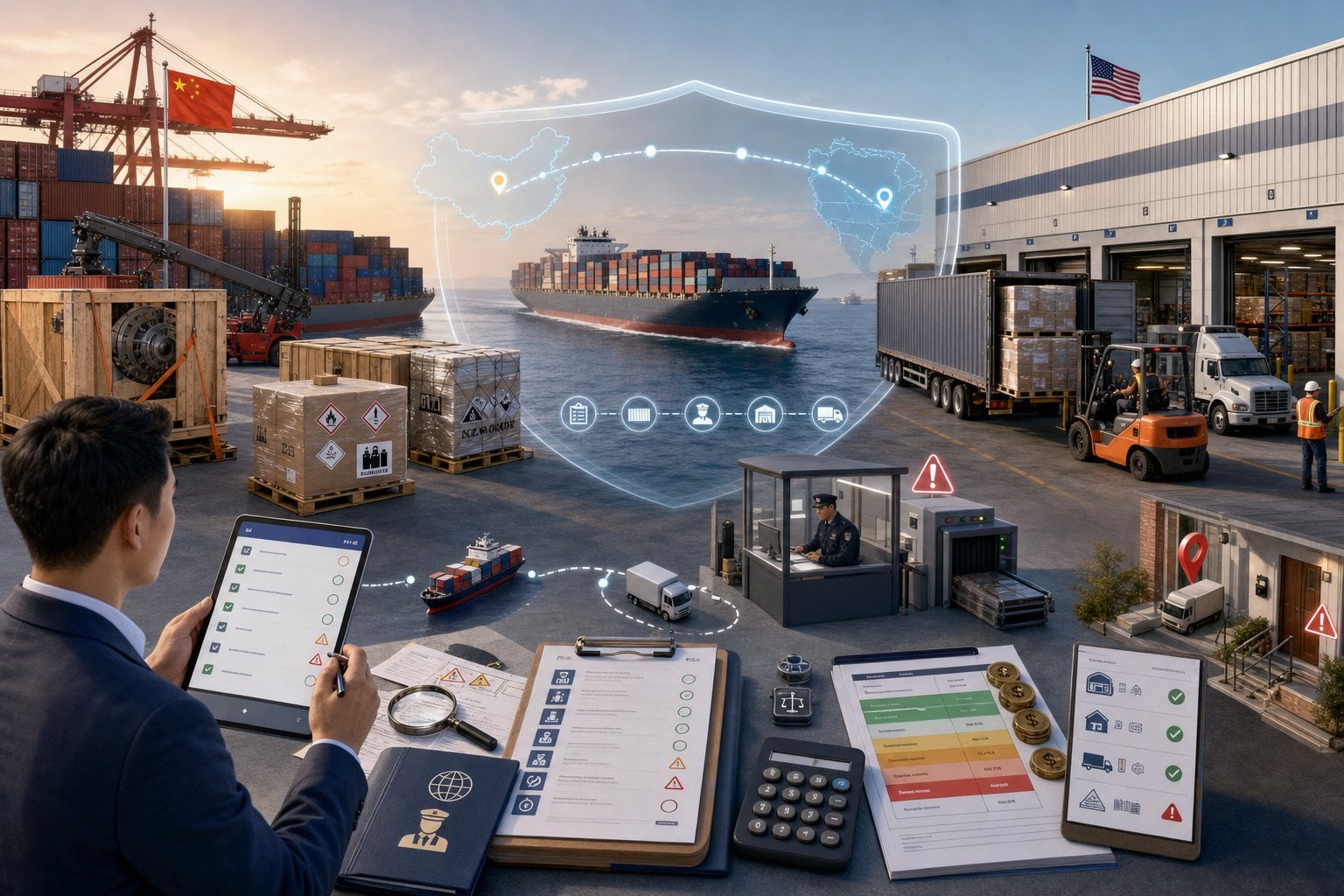
China to USA Freight Forwarders: Partner Selection Guide
If you import goods from China, you already know the shipping quote is never the whole story.
A rate that looks great in an email can turn into a very different number once your container clears the port. That gap is where margins quietly disappear.
This guide shows you how to evaluate China to USA freight forwarders like a seasoned importer: by looking past the base rate and into the details that actually determine your cost.
The goal isn’t to find the cheapest freight forwarding company—it’s to find one that gives you a total cost you can trust before you sign anything.
Along the way, you’ll see how a partner like AEB Logistics structures its process to keep quotes honest and shipments moving.
Contents hide
2 The Margin Risks Behind Low Shipping Quotes
2.1 Why Headline Freight Rates Can Mislead Importers
2.2 How Incoterms Shape Cost Exposure
3 Match Transport Mode to Your Cargo
3.1 When Air Freight Makes Financial Sense
3.2 Choosing Between FCL and LCL Ocean Freight
3.3 Using Express for Urgent Replenishment
4 Understand the Door-to-Door Shipment Journey
4.1 Factory Pickup and Export Preparation
4.2 International Transit and Milestone Tracking
4.3 Import Entry and Final Delivery
5 Evaluate Customs Capability Before You Book
5.1 HTS Classification, Duties, and Documentation
5.2 Importer of Record and Customs Bond Requirements
5.3 DDP Responsibilities and Pricing Predictability
6 Calculate Total Landed Cost, Not Just Freight
6.1 The Costs That Belong in a Landed-Cost Model
6.2 Comparing Transparent Quotes With CIF Pricing
6.3 Information Needed for an Accurate Proposal
7 Choose a Partner That Supports Growth
7.1 Communication, Accountability, and Issue Resolution
7.2 Amazon FBA Readiness and Delivery Coordination
7.3 Questions to Ask Before Selecting a Forwarder
8.1 What is total landed cost and why should I evaluate it instead of just the base freight rate?
8.2 Why can a CIF quote be misleading, and how is it different from a DDP quote?
8.3 How should I choose between air freight and ocean freight for my shipment?
8.4 What factors determine whether I should use FCL or LCL for ocean freight?
https://www.youtube.com/watch?v=KW1kwT1zfok
RELATED China to USA Freight Forwarders: In-Depth 2026 Comparison Guide
Key Points
Margin Risks Behind Low Shipping Quotes: A great-looking quote often masks hidden destination charges, delays, and poor communication that can erode margins and surprise you at the port.
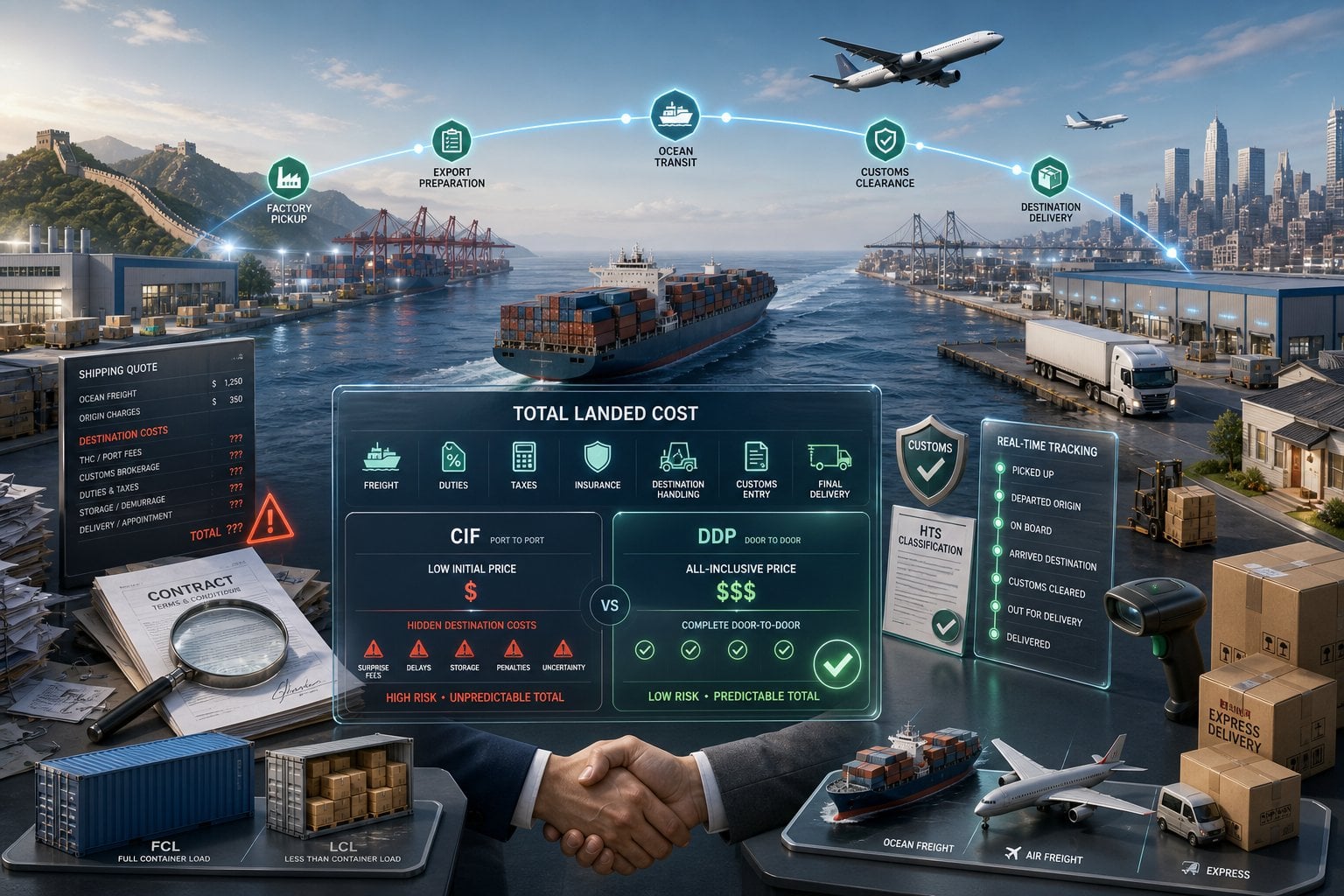
Incoterms Shape Cost Exposure: CIF quotes can look cheap but hide destination port charges; DDP quotes cover costs to your door for more predictable pricing.
Understand the Door-to-Door Shipment Journey: A true door-to-door shipment involves five steps from factory pickup to final delivery, and one integrated provider reduces delays and miscommunication.
Calculate Total Landed Cost, Not Just Freight: Total landed cost includes duties, taxes, insurance, destination handling fees, and entry coordination—giving you the true profitability of your shipment.
Choose a Partner That Supports Growth: Seek a forwarder with transparent landed-cost quotes, robust customs capability, real-time tracking, and proven Amazon FBA routing to protect margins and timelines.
RELATED China to USA Freight Forwarders: Compare Top Logistics Partners for 2026
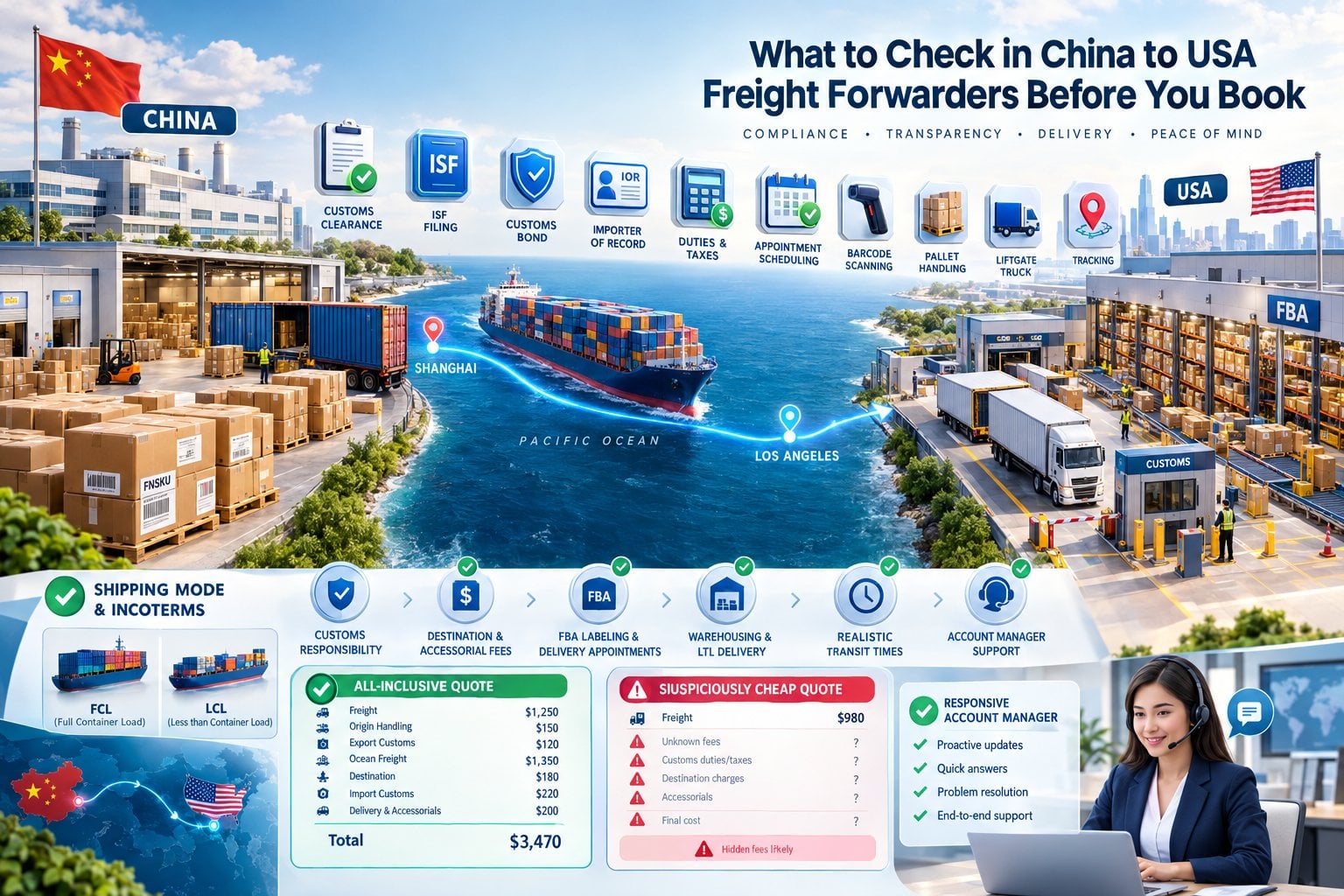
The Margin Risks Behind Low Shipping Quotes
Every experienced importer has a story about a “great deal” that turned expensive.
It usually starts with a shipping quote that looked too good to ignore, and it ends with a surprise invoice at the port.
Why Headline Freight Rates Can Mislead Importers
The freight rate you see first is often just one slice of your total cost.
Hidden fees at the destination port, unpredictable delays, and poor communication from your forwarder can all add up fast.
Botched customs paperwork and the wrong shipping terms make it worse.
These issues don’t just cost money—they eat into the time you need to get product to customers.
How Incoterms Shape Cost Exposure
Incoterms are the shipping terms that decide who pays for what, and when.
One of the riskiest for new importers is CIF (Cost, Insurance, and Freight).
CIF quotes look cheap upfront, and that’s exactly the problem.
CIF almost always hides destination port charges that show up after your cargo lands in the U.S., turning a “low cost” shipment into an expensive one.
Compare that to DDP (Delivered Duty Paid), where your forwarder handles the costs, duties, and risk all the way to your door.
The price you’re quoted is the price you pay. No guessing games at the port.
RELATED Freight Forwarder China To USA: Essential Guide For Efficient International Shipping
Match Transport Mode to Your Cargo
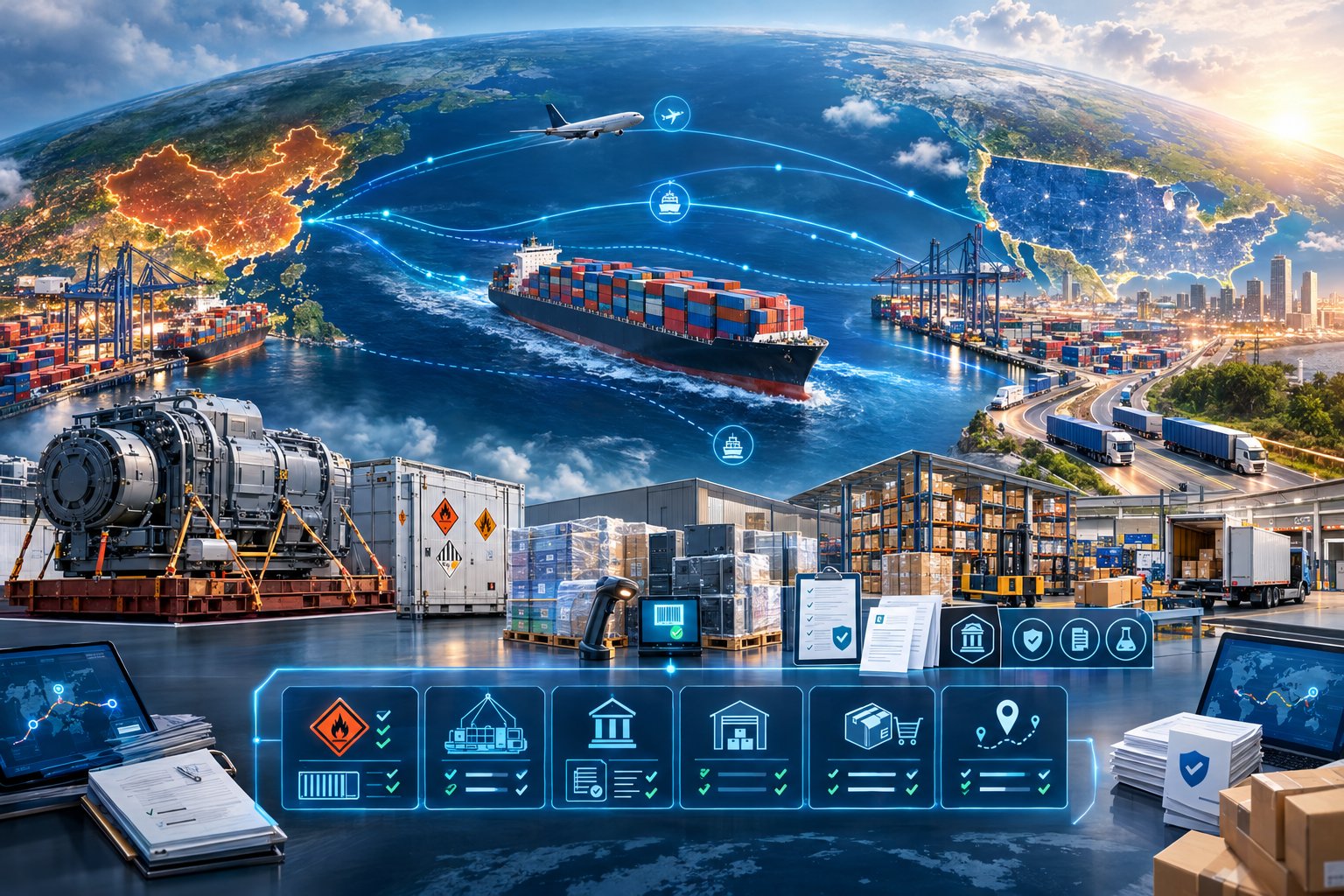
Choosing between air and ocean freight comes down to one trade-off: time versus money.
Get this decision right, and you protect your margin before the shipment even leaves China.
When Air Freight Makes Financial Sense
Air freight is fast, but it costs more per pound than ocean freight.
It makes sense for lightweight goods, urgent orders, or high-value products where speed is worth paying for.
If your product is bulky or low-margin, air freight can quietly wipe out your profit on the shipment.
Use it selectively, not as a default.
Choosing Between FCL and LCL Ocean Freight
Ocean freight is slower, but it’s the cost-effective workhorse of China-US shipping.
You have two main options:
FCL (Full Container Load): You book an entire container. Best for larger volume shipments where you can fill the space efficiently.
LCL (Less than Container Load): You share container space with other shippers. Good for smaller shipments that don’t justify a full container.
The right choice depends on your order size and how it affects your per-unit shipping cost.
Using Express for Urgent Replenishment
When inventory runs low and a sales window is closing, faster options can protect revenue even at a higher shipping cost.
The key is knowing when speed is worth the premium and when it isn’t. That decision should be based on your actual margins, not a gut feeling.
RELATED Ultimate Guide: Finding the Best Freight Forwarder from China to the USA
Understand the Door-to-Door Shipment Journey
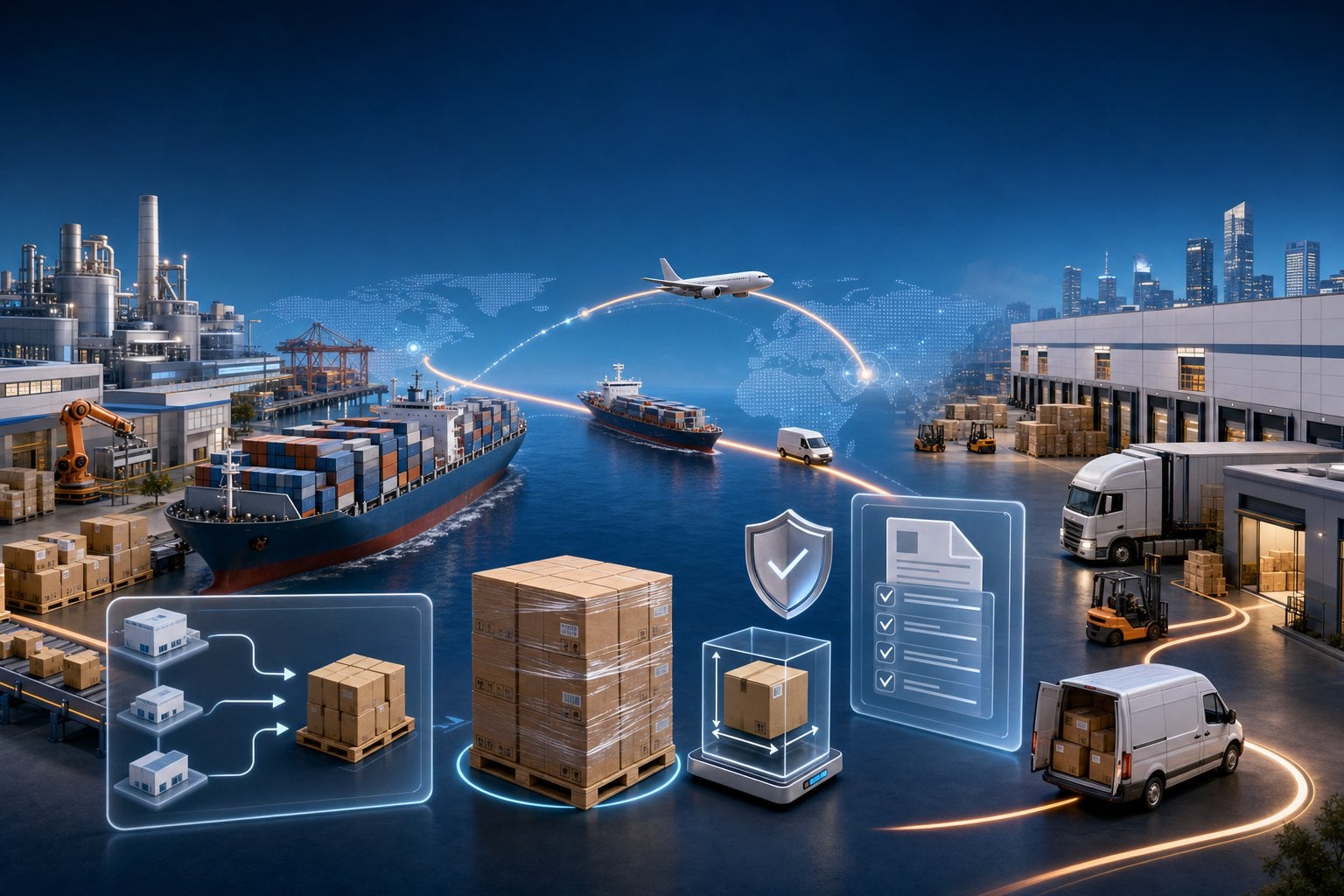
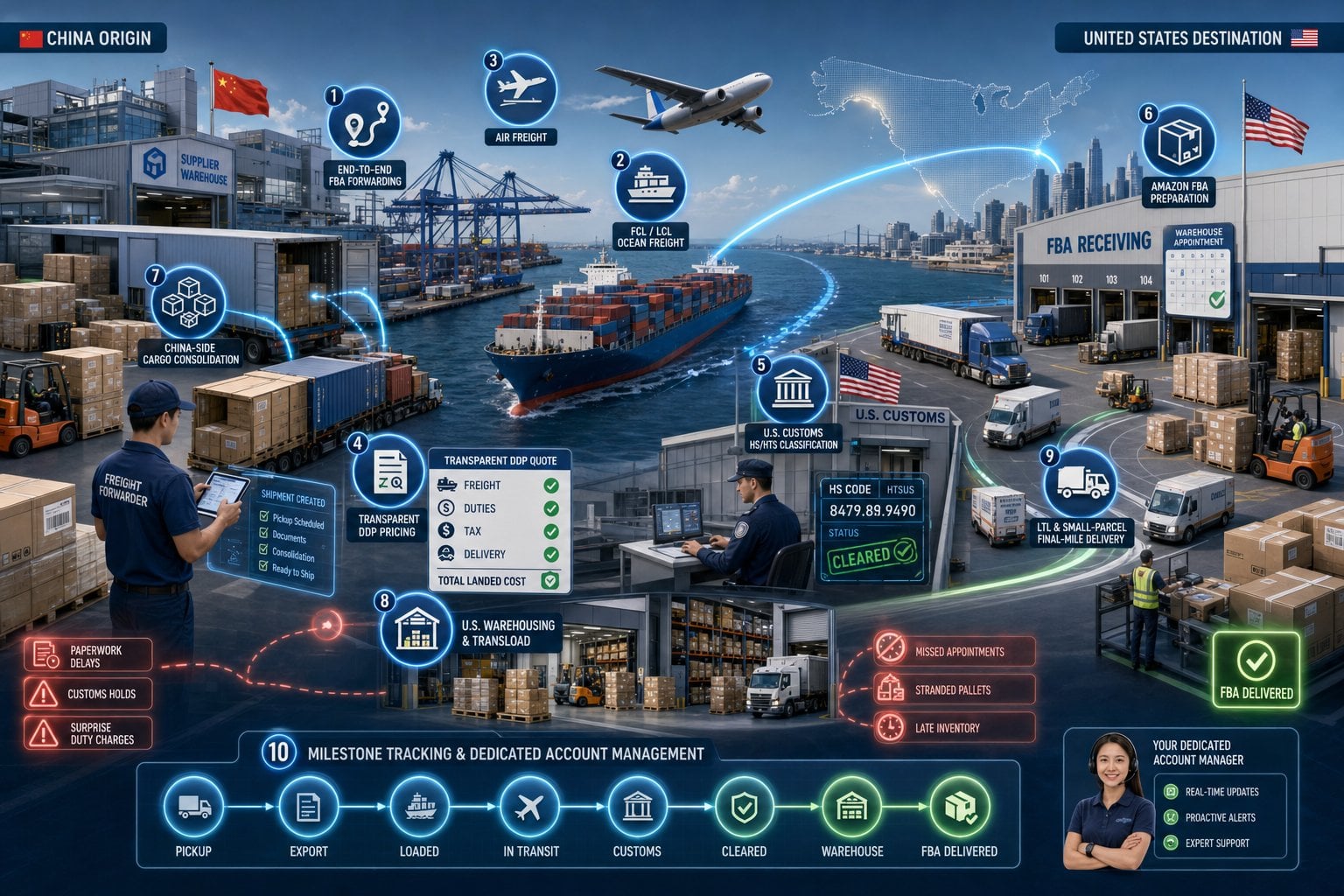
A true door-to-door shipment involves five distinct steps.
Knowing them helps you spot where delays and miscommunication usually happen.
Factory Pickup and Export Preparation
The journey starts with pickup at your factory in China, followed by export customs clearance.
This is where documentation accuracy starts to matter, long before the cargo reaches a port.
International Transit and Milestone Tracking
Next comes the actual ocean or air transit across the globe.
Real-time tracking during this stage gives you visibility instead of radio silence, which matters if you’re managing inventory timing for retail or Amazon FBA.
Import Entry and Final Delivery
The final steps are U.S. import customs clearance and final delivery, which might mean routing straight to an Amazon FBA warehouse.
When one freight forwarding company manages all five steps under one roof, you cut down on the handoffs between different parties that usually cause delays and confusion.
RELATED Top Tips to Find the Best Freight Forwarder China to USA
Evaluate Customs Capability Before You Book
Customs is where good shipments go wrong.
It’s also where a forwarder’s real competence shows up.
HTS Classification, Duties, and Documentation
Every product has an HTS code (Harmonized Tariff Schedule), the classification system that determines your import duties and taxes.
Think of it as a product’s identification number for customs purposes.
Get the code wrong, and your cargo can be flagged, audited, and held at the border for weeks.
A forwarder with strong customs experience handles this correctly the first time.
Importer of Record and Customs Bond Requirements
As the importer, you are the Importer of Record, which means duties and taxes remain your legal responsibility even when a freight forwarder coordinates the logistics.
Confirm whether a customs bond is required for your shipment type and who is coordinating that documentation.
DDP Responsibilities and Pricing Predictability
Under a DDP shipping agreement, your forwarder manages the costs and risk associated with logistics coordination until goods reach your door.
Duties and taxes are still ultimately your responsibility as the importer, but a well-structured DDP quote gives you a predictable number to plan around instead of a moving target.
Bad customs paperwork is one of the leading causes of port delays and unexpected fees.
Saving a small amount by choosing an inexperienced forwarder can cost far more in exam fees, storage charges, and lost sales from delayed inventory.
Calculate Total Landed Cost, Not Just Freight
Total landed cost is the only number that tells you whether a product is actually profitable to import.
The Costs That Belong in a Landed-Cost Model
Think of your landed cost as a full pie, not one slice.
The base freight rate is just one piece. You also need to budget for:
Customs duties and taxes
Insurance
Destination and port handling fees
Any documentation or customs entry coordination fees
Comparing Transparent Quotes With CIF Pricing
A transparent quote, like a well-structured DDP quote, might look slightly higher upfront.
But your destination fees are already accounted for, so your total landed cost is predictable.
A CIF quote looks cheaper at first glance.
Once hidden destination fees show up, the real landed cost is often higher and far less predictable.
Compare quotes on total cost, not the number at the top of the page.
Information Needed for an Accurate Proposal
A forwarder can only give you an accurate, transparent quote if you provide complete cargo details upfront.
Be ready to share:
Origin and destination
Incoterms you’re requesting
HS code for your product
Cargo value
Number of packages, dimensions or volume, and weight
Cargo-ready date
Any special handling requirements
Giving a realistic target budget upfront also helps a trustworthy forwarder design a solution, sometimes blending air and ocean freight, that fits your numbers instead of guessing.
RELATED China to USA Freight Forwarders: Easy-to-Work-With Signs
Choose a Partner That Supports Growth
The right partner does more than move boxes. They protect your margin and your sanity.
Communication, Accountability, and Issue Resolution
Things go wrong in international freight forwarding. That’s simply reality.
What separates a good partner is proactive communication, keeping you informed at every stage instead of leaving you to find out after the fact.
Paying slightly more for reliable, transparent service is almost always cheaper than dealing with logistics disasters, lost inventory, and unexpected port fees.
Value beats the lowest price tag over time.
Amazon FBA Readiness and Delivery Coordination
If you sell on Amazon, confirm your forwarder has real experience coordinating FBA routing.
This is a specific skill set, not a generic add-on, and it matters if you want inventory to reach fulfillment centers on schedule.
AEB Logistics offers over 20 years of experience coordinating shipments from China, with dedicated account-manager support, shipment tracking, customs-entry coordination, air and ocean freight options, and Amazon FBA capabilities, all through one point of contact.
Questions to Ask Before Selecting a Forwarder
Use this checklist before you commit to any supply chain services provider:
Do they offer genuinely transparent, landed-cost quotes?
Can they manage complex customs work, including HTS classification and DDP coordination?
Do they provide real-time shipment tracking?
Do they have real Amazon FBA routing experience?
Do they communicate proactively and resolve problems quickly?
AEB Logistics has a free quote process that’s built around transparency. To get a useful, accurate proposal, you’ll want to share your origin and destination, preferred Incoterms, HS code, cargo value, package count, dimensions or volume, weight, cargo-ready date, and any special requirements.
Having that info handy turns a generic estimate into something you can actually use for pricing. It’s not always obvious, but those details really matter.
RELATED China to USA Freight Forwarders: 2026 Comparison, Costs, and Best Services
FAQs
What is total landed cost and why should I evaluate it instead of just the base freight rate?
Total landed cost is the complete amount required to get a product from origin to your door, not just the base freight rate. It includes customs duties and taxes, insurance, destination handling fees, and any documentation or entry coordination fees. Evaluating total landed cost helps you understand the true profitability of your shipment rather than being surprised by hidden charges at the port.
Why can a CIF quote be misleading, and how is it different from a DDP quote?
A CIF quote may look cheap upfront because it only covers the freight to the destination port and insurance, leaving destination port charges and handling fees to be paid later. This can lead to higher, less predictable costs after cargo lands. In contrast, a DDP quote includes the costs, duties, and risk all the way to your door, providing a more predictable total cost.
How should I choose between air freight and ocean freight for my shipment?
The choice depends on time versus cost. Air freight is faster but more expensive per pound, making sense for lightweight, urgent, or high-value products. Ocean freight is slower but more cost-effective, suitable for larger, bulkier, or lower-margin shipments. Use air freight selectively when speed justifies the premium.
What factors determine whether I should use FCL or LCL for ocean freight?
FCL (Full Container Load) is best when you can fill an entire container and want to optimize space for larger shipments. LCL (Less than Container Load) is suitable for smaller shipments that don’t require a full container. The right choice depends on your order size and how it affects your per-unit shipping cost.
What should I look for when evaluating a forwarding partner to ensure reliability and transparency?
Look for genuinely transparent, landed-cost quotes, the ability to handle complex customs work including HTS classification and DDP coordination, real-time shipment tracking, proven Amazon FBA routing experience, and proactive communication with quick issue resolution. A partner who offers a clear process and accountability helps protect your margin and timeline.