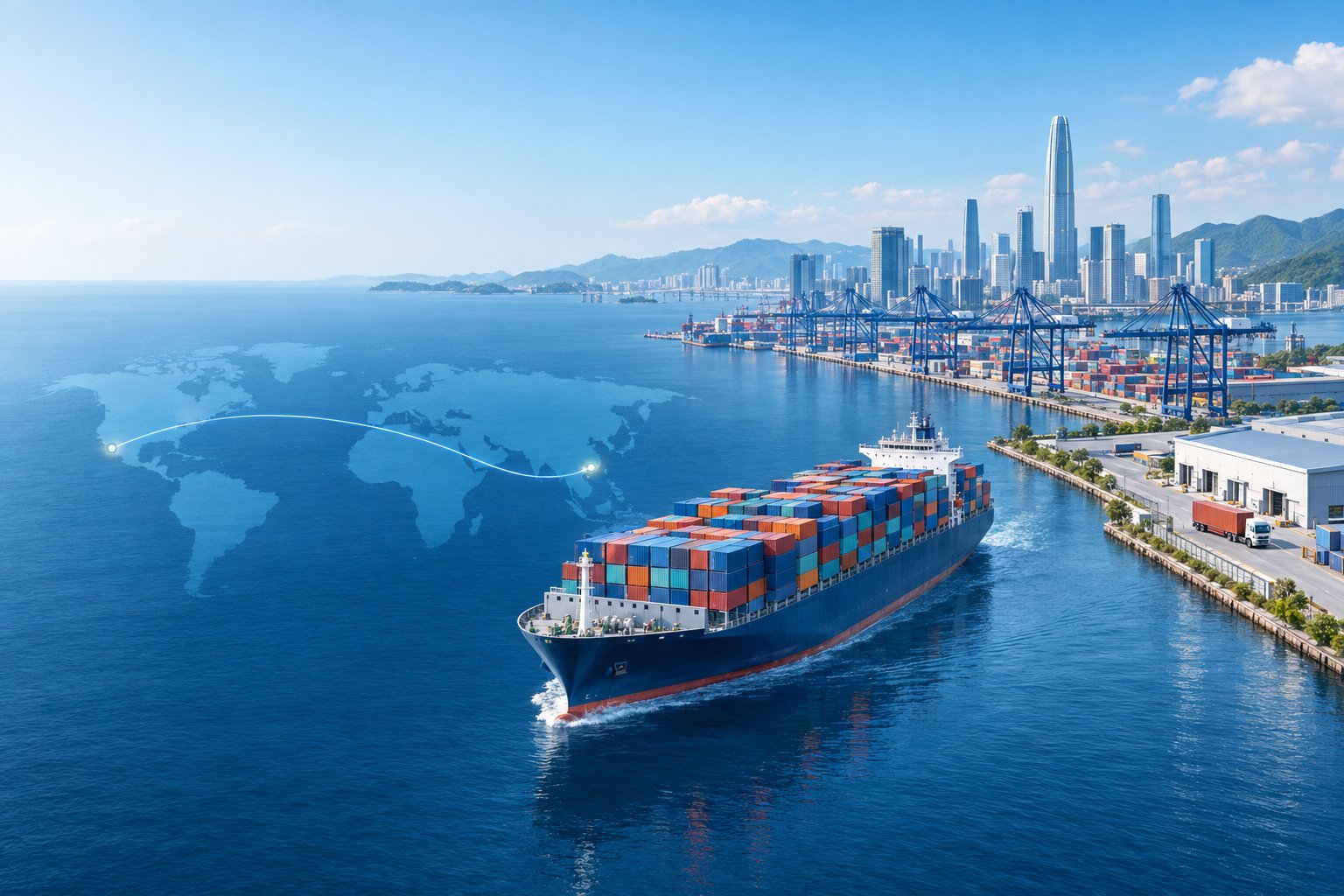
China to USA Freight Forwarders: 9 Quote Checks Before You Ship

Getting a price for shipping from China to the USA feels straightforward—until the invoice surprises you. Freight forwarders usually quote a base rate that skips over fees like customs clearance, warehouse handling, or fuel surcharges.
Knowing what to check before you accept a quote helps you dodge surprise charges and actually compare offers fairly.
Many freight forwarding companies use different formats for their quotes, which makes it tough to know if you’re comparing apples to apples. A rate that looks low at first might not cover as much as a higher one.
Let’s break down the line items you should review when getting quotes from China to USA freight forwarders. You’ll see what to look for in shipping rates and services, how to spot missing costs, and how to actually compare quotes so you can pick the best fit for your business.
Contents hide
1 Confirm the shipment mode: ocean FCL, ocean LCL, air freight, or express
2 Provide accurate cargo weight, dimensions, package count, and commodity details
3 Check whether the quote includes origin pickup, export handling, and Chinese port fees
4 Verify destination charges, customs brokerage, and U.S. import clearance costs
5 Ask whether ISF 10+2 filing is included for ocean shipments
6 Compare door-to-door, port-to-port, and airport-to-airport service scopes
7 Check the quoted transit time, sailing frequency, and potential transshipment points
8 Confirm delivery terms such as DDP, DAP, FOB, or EXW before comparing prices
9 Review fuel surcharges, peak-season fees, currency adjustments, and other accessorial charges
10 Preparing Shipment Details Before Requesting Pricing
10.1 Cargo Specifications That Affect Costs
10.2 Incoterms and Pickup Responsibilities
11 Comparing Service Scope Beyond the Freight Rate
11.1 Customs Clearance and Duty Support
11.2 Warehouse and Fulfillment Services
12.1 What charges should be included in a China-to-USA freight quote?
12.2 How can I compare ocean and air shipping rates on an equal basis?
12.3 Which surcharges and local fees should I check before accepting a quote?
12.4 Does the quoted price include customs clearance, duties, and taxes?
12.5 How do shipment weight, volume, and container type affect the final freight cost?
12.6 What delivery, warehousing, and fulfillment services are included in the quoted rate?
https://www.youtube.com/watch?v=Dp2TyKIfLH4
RELATED Freight Forwarder China To USA: Essential Guide For Efficient International Shipping
Confirm the shipment mode: ocean FCL, ocean LCL, air freight, or express
Before you compare quotes, figure out which shipping mode you’re actually pricing. Each mode has its own cost structure, so your quote only makes sense if it matches your cargo volume and timeline.
Ocean FCL means you rent a whole container—usually a 20ft or 40ft box. This works best if your cargo can fill most of the space, since you pay for the entire container no matter what.
Ocean LCL lets your cargo share a container with other shippers’ goods. You pay by volume, which makes sense for smaller shipments that don’t need a full container.
Recent rates for ocean LCL from China to the USA held steady at $130 per cubic meter, even as other rates shifted. Air freight moves your goods faster than ocean shipping, but you’ll pay more per unit of weight.
It’s the way to go when speed matters more than saving money. Express shipping is the fastest and priciest option, best for small, urgent shipments when delays just aren’t an option.
Be sure your quote request spells out the mode clearly. Mixing up FCL, LCL, and air freight quotes leads to comparisons that don’t match up.
RELATED Ultimate Guide: Finding the Best Freight Forwarder from China to the USA
Provide accurate cargo weight, dimensions, package count, and commodity details
Your freight quote is only as good as the info you give the forwarder. If your carton dimensions, gross weight, or package count are off, your quote will be too.
Freight forwarders use these details to figure out how much space your shipment needs and what it’ll cost to move. This holds true whether you ship by air or ocean.
Getting accurate freight quotes depends on correct cargo and delivery details, so double-check your numbers before sending them. List every commodity type in your shipment, not just a vague category.
Customs officials and forwarders both need this info to classify your goods correctly. If you leave out details, you could face delays or a quote that changes later.
Before you contact a forwarder, gather your shipment details in one place. Some free tools can help you calculate cargo volume and weight before you ask for pricing.
This saves you time and helps you compare quotes from different companies more easily. Your package count matters too—a shipment with ten boxes costs differently than one with two, even if the total weight is the same.
RELATED Freight forwarding from China to USA: How to Choose a China to USA Freight Forwarder?
Check whether the quote includes origin pickup, export handling, and Chinese port fees
Origin charges cover everything before your cargo leaves China. This includes pickup from your supplier’s factory, export handling at the origin port, and any documentation fees tied to customs export clearance.
Some quotes skip these costs entirely. If your quote only shows a single number for ocean freight, ask your forwarder to break it down.
You want line items for pickup, export customs, and port handling shown separately. This makes it easier to compare quotes from different China to USA freight forwarders.
Chinese port fees can shift depending on the port and your shipment size. These fees usually cover loading your cargo onto the vessel and terminal charges at the origin port.
If you’re shipping LCL, ask about CFS fees at origin too. These warehouse fees for consolidating shared containers can add a noticeable chunk to your total cost.
Missing origin charges is one of the most common reasons quotes look cheaper than they actually are. Always confirm what’s included before you commit.
RELATED Explore how to choose the right freight forwarder China to USA
Verify destination charges, customs brokerage, and U.S. import clearance costs
Once your goods reach the U.S., you’ll see new fees pop up. Ask your freight forwarder to break these out clearly, since destination charges can vary a lot between quotes.
Look for terminal handling fees, container unloading costs, and any inland trucking charges. These add up fast if they aren’t listed upfront.
Check what’s included for customs clearance. Some forwarders bundle brokerage fees into the base rate, while others charge separately for filing your entry summary.
Ask about bond fees, merchandise processing fees, and harbor maintenance fees too. These are standard U.S. import charges, but not every quote lists them the same way.
Confirm who handles duty payments and how they’re calculated. Getting a freight forwarder comparison that shows these costs side by side helps you spot hidden markups.
Ask if the quote covers customs exams or inspections. If your shipment gets flagged, extra storage and exam fees can appear quickly, so it helps to know these costs in advance.
Ask whether ISF 10+2 filing is included for ocean shipments
If you’re shipping by ocean, ask about ISF filing before you compare prices. ISF stands for Importer Security Filing, and it’s often called 10+2 because you’re responsible for 10 data points and the ocean carrier handles 2 more.
This filing has to reach CBP at least 24 hours before your cargo gets loaded onto the vessel in China. Miss the deadline, or file with wrong info, and you could face a $5,000 penalty plus delays at the port.
Some forwarders include ISF filing in their standard quote. Others charge it as a separate line item, and a few don’t mention it at all until after you’ve booked the shipment.
Ask each forwarder directly if ISF filing is part of their service or billed separately. Find out who collects the required data from your supplier and who submits it to CBP on time.
You’re the Importer of Record, so you carry the legal responsibility even if your customs broker or forwarder files the ISF for you. Knowing this upfront helps you avoid surprise fees and shipment holds later.
RELATED Freight Forwarding Red Flags: 7 Warning Signs to Watch for in China to USA Shipping
Compare door-to-door, port-to-port, and airport-to-airport service scopes
When you compare quotes from different China to USA freight forwarders, check what each price actually covers. A cheap quote often looks good only because it leaves out steps another quote includes.
Port-to-port pricing covers just the ocean leg. You handle pickup at the origin, customs clearance, and delivery from the destination port on your own.
Airport-to-airport works the same way but for air cargo. Comparing an airport-to-airport rate against a door-to-door air freight rate without checking scope will lead you to the wrong choice.
Door-to-door service covers more ground. It usually includes pickup, main transport, customs support, and final delivery under one quote.
This is why a door-to-door quote from China to USA can look higher on paper than a port-to-port rate, even though it may cost less once you add up every step yourself.
Before you accept any quote, ask for a written breakdown of what’s included. Match that breakdown against your actual needs, from pickup to final delivery.
Skip this step and you might end up comparing two numbers that don’t represent the same amount of work. There’s really no shortcut here—details matter.
RELATED Top Tips to Find the Best Freight Forwarder China to USA
Check the quoted transit time, sailing frequency, and potential transshipment points
Ask each freight forwarder for the exact transit time on your quote. Don’t settle for a general range.
Port-to-port sailing time is usually 14 to 22 days. Your door-to-door delivery takes longer after factoring in pickup, customs, and inland trucking.
Find out how often the carrier sails your route. Some routes have weekly departures, while others might only sail every 10 to 14 days.
If you miss a sailing date, your goods could sit at the port for over a week until the next one. That’s a headache nobody wants.
Ask if your shipment goes direct or through a transshipment port. Direct service to Los Angeles or Long Beach is usually faster and less risky.
A transshipment stop in Busan or Singapore adds time and more chances for delays. This can really mess up your timeline.
Get all this info in writing before you compare quotes. Two forwarders might quote the same price, but one route could take a week longer because of a slower schedule or an extra stop.
RELATED Freight Shipping from China to USA: Methods, Costs & Key Steps
Confirm delivery terms such as DDP, DAP, FOB, or EXW before comparing prices
Before you start comparing, check which delivery term each quote uses. These terms decide who pays for what and where your costs begin and end.
EXW means the seller just gets your goods ready at their factory. You’re on the hook for pickup, export clearance, ocean freight, import duties, and final delivery.
This term looks cheap at first, but you take on most of the work and risk. It’s not always a bargain.
FOB puts more responsibility on the seller. They pay up to the origin port, then freight and customs are your job.
DAP and DDP put more on the seller or forwarder. With DAP, your goods arrive at your place, but you still handle import duties and customs clearance.
DDP goes even further. The forwarder handles duties, taxes, and clearance, so you get one final number and less hassle.
If you want more detail, check this DDP vs FOB vs EXW guide for China imports.
Match the term to your comfort level with logistics. If you compare quotes without knowing the term, you’ll probably get hit with surprise charges later.
RELATED Freight Forwarder China To USA: Essential Guide For Efficient International Shipping
Review fuel surcharges, peak-season fees, currency adjustments, and other accessorial charges
Base freight rates never tell the whole story. Extra fees can add 20 to 40 percent to your total shipping costs, so always ask for a full breakdown before you agree to anything.
Fuel surcharges are super common. Many carriers tack these on top of your base rate, and then add other fees like handling and security on top of that.
Even small percentage changes add up fast. It’s easy to lose track if you don’t watch closely.
Peak season surcharges are another cost to watch. Carriers apply these fees when demand and traffic spike, often before holidays or during busy shipping months.
Ask your forwarder to list every accessorial charge that could hit your shipment. These can include detention, chassis use, liftgate fees, and residential delivery charges, and they’re added on top of your base freight rate.
Currency adjustment factors matter too, especially for international shipments. Ask how often these rates change and how your forwarder calculates them, so you’re not blindsided by shifting costs between your quote and your invoice.
RELATED Ultimate Guide: Finding the Best Freight Forwarder from China to the USA
Preparing Shipment Details Before Requesting Pricing
Before you ask any freight forwarding companies for a price, gather the exact details of your cargo and know who’s responsible for each step. Skipping this step is probably the top reason quotes come back wrong or incomplete.
Cargo Specifications That Affect Costs
Your quote depends on the exact size and weight of your shipment. You’ll need the packed dimensions, gross weight, and number of packages—not just the size of a single product sample.
Sea freight and air freight use different weight rules. Ocean quotes use cubic meters. Air quotes use dimensional weight, charging you by whichever is higher: size or actual weight.
You also need to note if your cargo is:
Stackable or non-stackable
Hazardous or non-hazardous
Fragile or standard
Palletized or loose boxed
Any of these factors can bump your rate up or down. A forwarder can’t give you an accurate freight quote without this info upfront.
Incoterms and Pickup Responsibilities
Incoterms spell out who pays for what during shipping. Terms like FOB, EXW, and CIF change who handles pickup, export clearance, and main transport costs.
If you ship EXW, you’re responsible for pickup at the supplier’s factory. If you ship FOB, your supplier delivers to the port, and your forwarder takes it from there.
Confirm the exact pickup address, contact person, and cargo readiness date. This detail affects how to prepare shipment details before requesting a freight quote, since pickup location changes trucking costs and timing.
Always clarify who arranges customs clearance in China. Depending on your terms, this job falls on you or your supplier.
RELATED Freight forwarding from China to USA: How to Choose a China to USA Freight Forwarder?
Comparing Service Scope Beyond the Freight Rate
A low freight rate doesn’t tell you what happens after your goods clear the port. When you compare [China to USA freight forwarders](https://aeblogistics.com/china-to-usa-freight-forwarders-in-depth-2026-comparison-guide/), check what services are included and what costs extra.
Customs Clearance and Duty Support
Ask each forwarder if customs clearance is included in the quote or billed separately. Some forwarders only handle the ocean or air portion and leave customs to you or a third party.
This can cause delays if you’re not prepared. Find out if the forwarder files your entry with US Customs and Border Protection.
Ask who calculates your duties and tariffs, and whether they help classify your goods under the right HTS code. Wrong classification can lead to fines or shipment holds.
Check if the forwarder offers DDP (Delivered Duty Paid) service. This means duties and taxes are paid before delivery, so you avoid surprise bills.
Also, ask about ISF filing fees—required for ocean shipments and often missed in quotes.
Warehouse and Fulfillment Services
Warehouse and fulfillment support can save you time once your goods arrive in the US. Ask if the forwarder offers storage at US ports or inland warehouses, and how long you can store goods before extra fees kick in.
Some forwarders provide fulfillment services like picking, packing, and shipping orders to your customers. This is huge if you sell on Amazon or Shopify.
Check if they can label goods for FBA or handle returns. Compare pricing for these services across providers.
Storage fees, handling charges, and pick-and-pack costs can vary a lot. Sometimes a forwarder with lower freight rates charges more on the warehouse side, so watch out.
RELATED Explore how to choose the right freight forwarder China to USA
Frequently Asked Questions
Freight quotes from China to the USA involve a lot of moving parts—from mode selection to customs fees to final delivery. Knowing what should be in your quote helps you avoid surprise costs and compare China to USA freight forwarders accurately.
What charges should be included in a China-to-USA freight quote?
A complete quote should list the base freight rate and all related fees. This covers origin charges, ocean or air freight, and destination fees.
You should also see line items for fuel surcharges, documentation fees, and any handling charges. If a quote just shows one lump sum, ask for a breakdown so you can spot hidden costs before you commit.
How can I compare ocean and air shipping rates on an equal basis?
Ocean and air freight use different pricing units. Ocean rates are usually per container or cubic meter, while air rates are based on chargeable weight.
Chargeable weight is the higher of actual or volumetric weight. Once you convert both to cost per kilogram or cubic meter, you’ll see which fits your budget and timeline. Don’t forget: ocean freight takes weeks longer than air freight.
Which surcharges and local fees should I check before accepting a quote?
Surcharges can add a big chunk to your final bill if you don’t check for them upfront. Common fees include peak season surcharges, fuel surcharges, and currency adjustment factors.
Also ask about terminal handling charges at both the Chinese port and the U.S. port. Local delivery fees, chassis fees, and demurrage or detention charges can apply if containers sit too long.
Ask your forwarder for a full list of possible surcharges tied to your specific shipping rates and services before you finalize anything.
Does the quoted price include customs clearance, duties, and taxes?
Many freight quotes only cover transportation and leave out customs-related costs. You need to ask if customs clearance is part of the price or billed separately.
Import duties and taxes are based on your product’s classification and value, so they’re almost never included in the base freight rate. Confirm whether your forwarder handles customs clearance in-house or uses a third-party broker. This affects both cost and how quickly your goods clear U.S. customs.
How do shipment weight, volume, and container type affect the final freight cost?
Your shipment’s weight and volume play a big role in how much you’ll pay. They also decide which pricing method actually applies to your situation.
If you’re shipping by ocean, you’ll pick either full container load (FCL) or less than container load (LCL) depending on your cargo size. FCL shipments use a flat rate per container.
On the other hand, LCL rates depend on the cubic meters your goods take up. Container type makes a difference too—standard, high-cube, and refrigerated containers all come with their own price tags.
It’s worth double-checking your measurements and sharing them with your forwarder. That way, the quote you get should actually reflect what you’re shipping.
What delivery, warehousing, and fulfillment services are included in the quoted rate?
Freight quotes don’t always cover what happens after your cargo reaches the port. It’s smart to ask if the price includes trucking to your final destination or if that’s a separate charge.
If you need storage before distribution, check if warehouse and fulfillment services come with the package or if you’ll need another contract. Some forwarders handle pick, pack, and ship for e-commerce, while others just do port-to-door delivery.
It’s worth figuring out these details early on. Otherwise, you might end up surprised by extra costs down the road.
Related Posts
Freight Forwarder China To USA: Essential Guide For Efficient International Shipping
Ultimate Guide: Finding the Best Freight Forwarder from China to the USA
Freight forwarding from China to USA: How to Choose a China to USA Freight Forwarder?
Explore how to choose the right freight forwarder China to USA